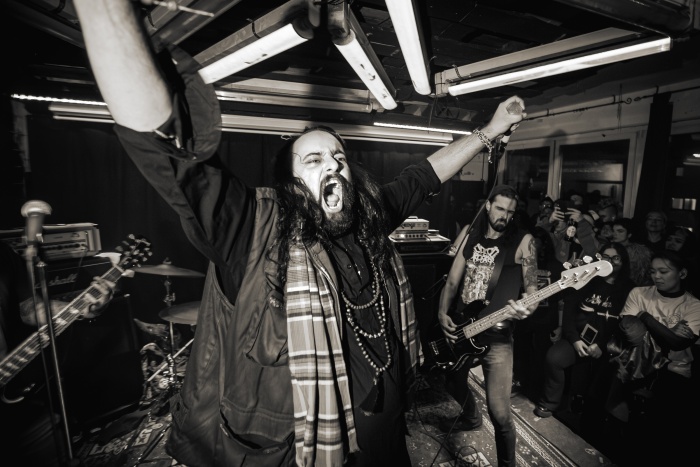
Berlin-based Zanjeer have never been a band interested in subtlety. From their earliest material, the hardcore punk outfit has been driven by a clear, confrontational message—one rooted in lived experience, global politics, and a refusal to dilute either.
That intensity has only sharpened on their latest release, Seher-e-Maqhoor (“Dawn of the Oppressed”), a record that reflects both a physical and ideological shift for the band. While Zanjeer initially formed in 2020 with members spread across different German cities, the eventual move to Berlin brought a noticeable transformation. “There was definitely a musical shift,” vocalist Hassan Dozakhi tells No Echo, pointing to new chemistry within the lineup that pushed the band toward “more intense” songwriting and expanded structures.
But the bigger change came from the environment itself. For Dozakhi, navigating Germany’s political landscape—especially amid the ongoing violence in Gaza—was a breaking point. “Most punks seemed to be anti-deutschers… local zionist punx with a lot of German guilt,” he says. The relocation to Berlin, however, opened new doors. Long commutes across the country led to connections with South Asian leftists and a broader network of immigrant and POC punks, reinforcing the band’s sense of purpose. “This was inspiring, and gave the band a new sense of strength,” he adds.
That strength translates directly into Zanjeer’s lyrical direction. The band doesn’t sidestep difficult subjects—they confront them head-on. “We decided lyrically to go in on the attack… to talk about the genocide, to say as a band based in Germany, FREE PALESTINE without any sense of shame,” Dozakhi says. At the same time, the record tackles the everyday realities of racism and Islamophobia in Europe, themes that surface in tracks like “Majboor.”
Musically, Zanjeer draws from a wide spectrum—raw hardcore influences like Raw Power and Ratos de Porão sit alongside unexpected rhythmic ideas pulled from Arabic and Punjabi traditions. The result is something intentionally hard to pin down. “I like to think that with the new album we’ve made a sound that is truly our own,” Dozakhi notes.
A key part of that identity is language. Zanjeer now performs entirely in Urdu, a decision that carries both personal and political weight. “It’s the language I speak in my head… the vocabulary that paints my perception of the world,” Dozakhi explains. Far from being a limitation, Urdu enhances the band’s delivery. “I scream a lot fiercer in Urdu than I do in English,” he says, highlighting how the language’s natural rhythm and guttural sounds lend themselves to hardcore’s aggression.
The album’s title, Seher-e-Maqhoor, reflects that same sense of defiance. While it can be translated in multiple ways—“Dawn of the Oppressed,” “Morning of the Conquered”—its meaning remains rooted in resistance. “Every tyrant has their eve, and every oppressed shall have their morning,” Dozakhi says.
That historical consciousness runs throughout the project, extending even to its artwork, which references the 1857 revolt against British colonial rule in India. For Dozakhi, it’s not just about the past—it’s about understanding how those histories shape the present. “If you research atrocities, the expression will be rage and the rage will be raw,” he says, underscoring the balance between research and emotional response that informs his writing.
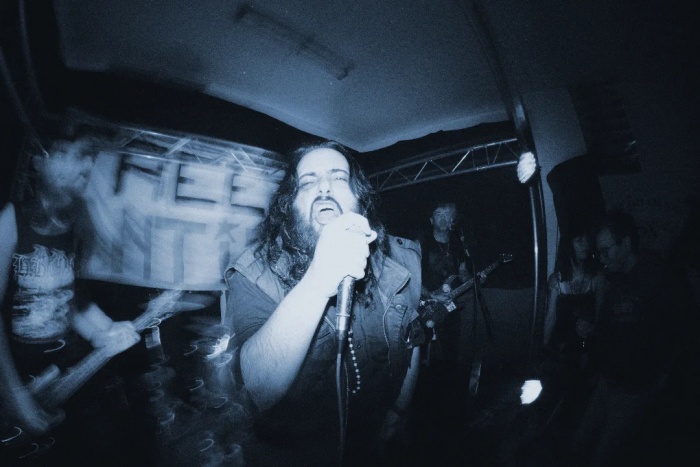
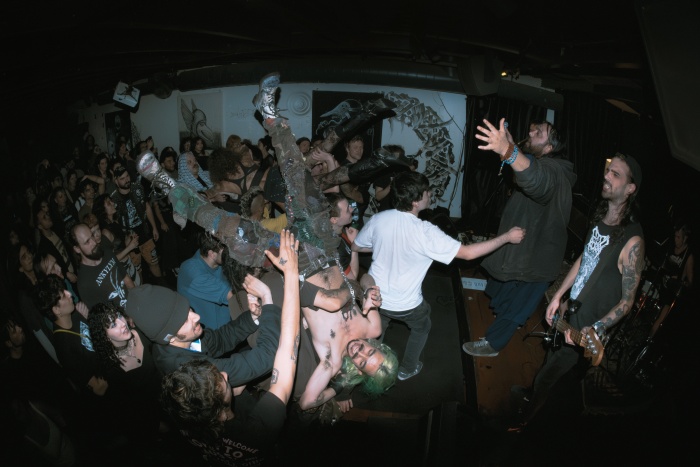
Despite the weight of its subject matter, Zanjeer’s story isn’t one of isolation. In Berlin, the band has found a diverse and engaged audience that reflects the global perspective they bring to their music. “I absolutely fucking love playing a Zanjeer show and seeing such a diverse set of faces in the crowd, screaming the lyrics back at me,” Dozakhi says.
Ultimately, Zanjeer isn’t just about documenting struggle—it’s about reclaiming space. As Dozakhi puts it, “brown people aren’t just in Europe to sell kebabs and wipe toilets… It’s time to pass us the fucking mic."
***
Seher-e-Maqhoor is out now and available in various physical formats from different labels at this link.
Zanjeer on social media: Instagram

Tagged: zanjeer