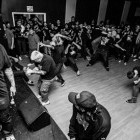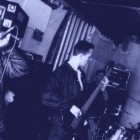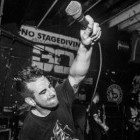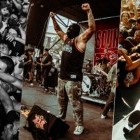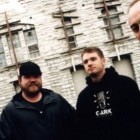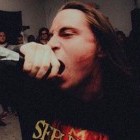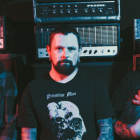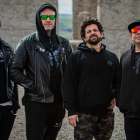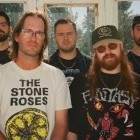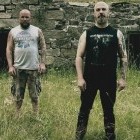
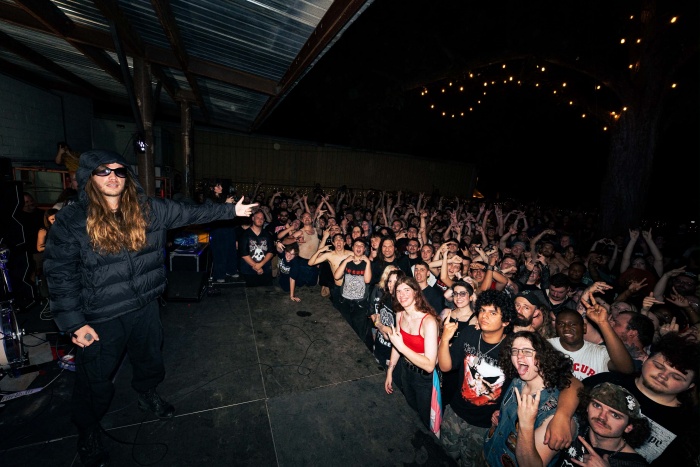
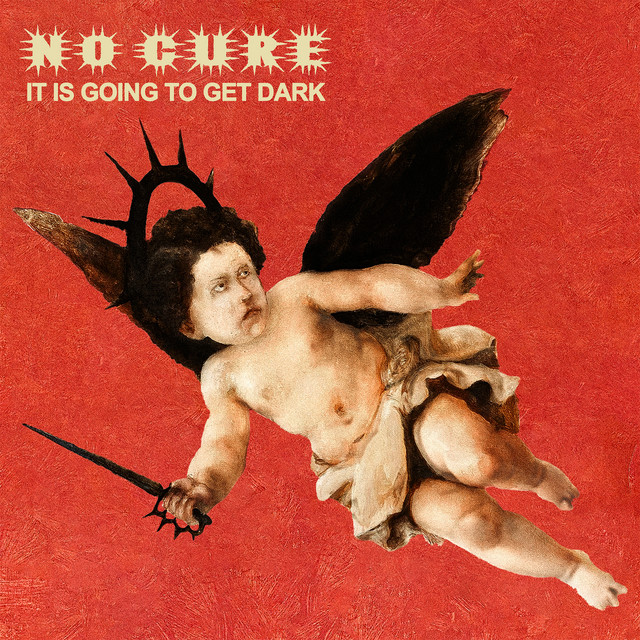
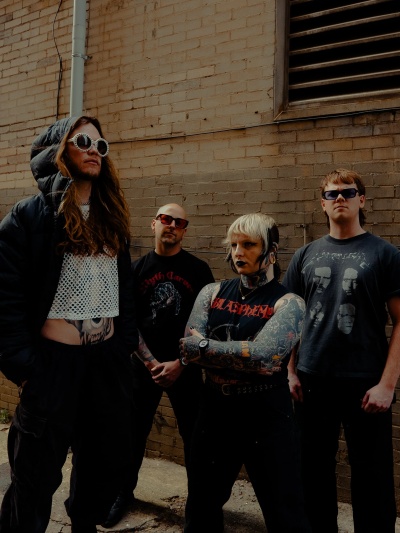
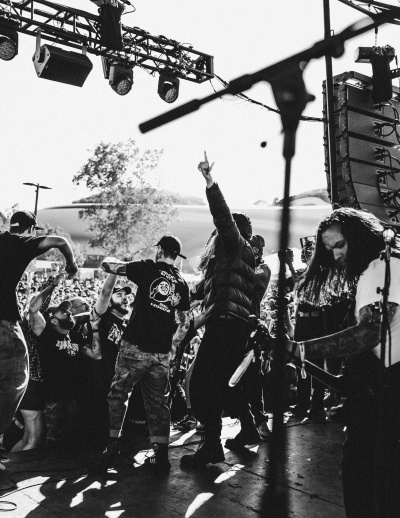
No Cure is an unrepentant straight edge hardcore band from Alabama. Their latest record, It Is Going to Get Dark, came out on SharpTone in June. The band spent the summer distributing pulverizing metallic hardcore across North America, including a 33-date tour with Bayway, Big Ass Truck, and Boltcutter.
The group's sound and visceral delivery bring to mind older influences and punishing peers: the apocalyptic All Out War and Earth Crisis, the vein.fm/Code Orange/Jesus Piece sound and style, Florida avengers Domain and Contention, Midwest heavyweights Inclination, and LIHC's Incendiary. But their idiosyncratic blend assures their individuality.
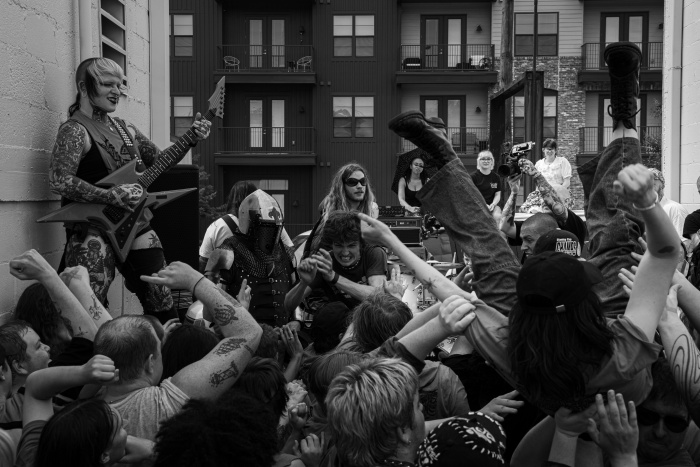
It Is Going to Get Dark contains 12 eviscerating tracks, including guest vocalists from Bayway, Inclination, Varials/Cells, and The Acacia Strain. And it ain’t all fests or packed large venues (they do those, too). Just prior to the album, they headlined Hardcore in Huntsville II.5, a free five-band show under the banner of “SXE Unity,” with booths for coffee, crafts, and tattoos.
Blaythe sits on the floor, back against the wall, in the frame of our video call. Other members are in an adjacent room hammering away at a final practice before jumping back on the road. No Cure are currently out on U.S. tour with Spite, Stick to Your Guns and Vomit Forth.
Funny enough, I presumed they harvested their moniker from the maelstrom of an opening track on Sick of It All’s seminal Scratch the Surface album (RIP Lou). The message of that classic would certainly resonate with this band. But as I was about to acknowledge what I thought was the obvious answer, Blaythe tells me, “It came from Foundation’s song.”
That song is “No Cure for Fools,” from 2011’s When the Smoke Clears. No Cure continues to thrive on paths laid by bands like Sick of It All and Foundation, walking the walk with ferocious music delivered with conviction, sincerity, and rage.
All right, how did No Cure begin? You're in the South, right? Are you in Birmingham?
Yeah, we're from Alabama. No Cure started at the end of the lockdown as an idea, right? It took a while to come together. I've known Aesop, our guitar player, for over a decade now. She and I always went to local shows in Alabama. She was always playing drums in punk bands. I play guitar in all kinds of shit.
She and I knew each other and always thought the other was really nice, but we never did anything serious together. We jammed a little bit, but at one point she said, “Hey, let's do a band.” And I said, “Okay,” because I'd been wanting to do something new for a while, and it just lined up nicely for me at that point. What I was doing before that was kind of falling apart.
She said, “But I want to play guitar, and I want you to sing.”
But wait, Aesop, you don't know how to play guitar.
So she basically learned guitar to do this band. And I mean completely from the ground up. I could do a scream, right? But I had never been a frontman or vocalist in any real capacity. I had my own things to learn, too.
I don't know what about that has really informed the way this is, but I think it's super integral to the identity of the band. I just hope people know, “Hey, you can kind of just learn how to do some shit, and it might be pretty cool.”
That was how the original idea came together. Then I knew Duncan, our drummer, from a previous band. We kind of wrote some songs, and I remember posting on my Instagram story, “Who in the Southeast plays guitar and wants to do shit?”
Enter Kyle Ray. I've actually known him forever because he played my first show when I was 12. I've always been a fan of him and his previous bands and stuff.
That's how it came together. Then we put out For the Stainless Steel, our first little demo, and started playing shows and haven't stopped. The first show and first release were in early 2022. It was originally supposed to be a fun straight edge side project, and it's become an extremely fun straight-edge thing I do every day.
Your approach seems very intentional. The severity, the visuals of your different record covers, the music, the image, the words—is that how you envisioned this manifesting, or was it perpetual?
We were very intentional with certain parts of it from the beginning. But these things mold over time, right? It’s the Mike Tyson quote: “Everyone has a plan until they get punched in the face.”
Every band knows what they want to be until they find themselves two weeks into a tour. You've slept in the van every single night of the tour, and you ask, “Wait, what is this actually?”
That's when, in my opinion, you start to refine what the band actually is. For us, it's been through touring. We are a version of what I thought we could be stylistically, but it is much richer and cooler than I thought we could be. I'm very thankful for how it's all grown together. How we've all become the closest of friends through all of this is really amazing.
As far as lyrics, how do you decide what you want to convey? Because it's so heavy, is it a little militant or declarative? [mocking voice] “How straight edge are you?”
Well, for me, straight edge is a binary thing, you know? It's yes or no. Some people find it annoying just to hear that someone lives their life that way. And they would say, “Wow, you're kind of some militant asshole.” I haven't even said anything yet, brother.
The mere existence of a straight edge person makes an insecure person question themselves. What is that? That has nothing to do with me. Me not drinking or not smoking with you doesn't have to mean anything about you. It doesn't have to do with them at all. It's a me thing. It's critical to who I am. But yeah, people definitely make it into something that I don't intend to make it into.
I am very glad I found straight edge at a young age. I will continue to raise the banner of straight edge in the ways that I can. Then maybe somebody can ask, “Is this something that could fit for me?” and they avoid a lot of pain in their life.
I believe I've avoided a lot of issues by abstaining from all of that. And I like that the money I spend doesn't go into those industries because it's predatory. Very, very dark shit happens out there, as you know.
That logic can be applied to a lot of stuff, and people say “ethical consumption” and “capital framework.” I understand that, but you can still do better than you might be doing. We can still try.
Well, the song “I'm Still Fucking Straight Edge” is 50 seconds. Is the song just that statement, just putting it out there? Which is awesome.
Thank you. For me, to make sense of that song and its place in the universe of No Cure, it's very important to think about the last record, I Hope I Die Here. That one was very centered on the Southeast and Alabama—the experience and struggle of that and the perceptions of the South. I really got into that kind of shit on that record. It was very conceptual.
There wasn't really room—I mean, there are still themes and ties—but there wasn’t a lot of room for just a straight edge song.
I wanted to do one of those, at least on the full-length. It's very important to me as a person, and it's very central to what we do. I know the majority of people don't identify that way, and that's fine.
But I just wanted to do that. It's a song where I feel there’s not one word wasted. Every word is exactly what it needs to be. I'm very proud of it. It says everything I've wanted to say about that interpretation, that facet of being straight edge.
It's a very complicated and deep thing for me at this point. You don't just commit your life to that because things are going great around you. The song says everything I've ever needed to say. I hope that resonates with someone. It might not, and that's cool. I got it out. I feel better now. Pasted markdown
I'm from New England, which has always produced a fruitful yield of hardcore bands, definitely straight edge. What was Alabama like when you were in high school and in your 20s? Did you find your peer group right away? Were you isolated and alone? With hardcore and the subgroup of straight edge, did people just think you were nuts down there? I may have certain prejudices about the South, so you can illuminate me.
Yeah, a lot of people do. That's why I wrote the last record.
I remember one of the first times I went to New York City for a show. Some stupid motherfucker asked me, once they heard my slight Southern accent, “Where are you from?” I replied, “I'm from Alabama.” And they continued, “Do you live off a dirt road?” Or, “Do you have roads? Are there only dirt roads down there?”
I remember just feeling so much hate in my heart in that moment. The looking down on the South thing is... brother, we must move past that.
But growing up, I found shows early. I went to my first local show when I was 12. A lot of what was happening in the Southeast at that time was at churches and other DIY spots, and a lot of bands were Christian metalcore bands. That's what I was exposed to as a kid. That's what I first got into.
I was never religious as a child at any point. Never. But those were the bands I was going to see. My first show was a band called MyChildren MyBride, and I was like, “Whoa, this shit's awesome.” I was 12. I just couldn't believe it. I thought, “I want to do that shit.”
Since then, I made a bunch of friends in the local scene early on. Some of them went to my school and made bands. At this point in my life, every person I choose to be with in some capacity is someone I've met through DIY shows, whether going to local shows or touring. That's my entire circle, my everything.
Every person in No Cure I met at a show. Not necessarily a Christian metalcore show—local moshcore, hardcore punk, whatever hardcore show. That's my favorite stuff, so it makes sense.
Was it Seventh Dagger or Eulogy? There was a big straight edge metallic scene in Florida, but that might be more late ’90s. Actually, that's a better question: As a young person growing up there, were there bands from the area that you looked up to? Did you have straight edge influences in Alabama?
No, there are bands that resonated with me, of course, but there wasn't a real straight edge movement in Alabama at that time.
The majority of the time that I've been going to shows in Alabama, as an adult, the amount of straight edge people you could count on your hand. Granted, now there are maybe 50 who are bearers of the X. It’s a renaissance. It's amazing. There are a bunch of straight edge bands now, but when I first started going to shows, there were zero.
There'd be some members of bands who would talk about being straight edge in some capacity, and I found myself very interested in that. But a lot of the straight edge bands I got into were from the internet as a kid. YouTube. All that Seventh Dagger stuff and that big boom happened when I was four. The late ’90s/early 2000s, I was four through six. So that just wasn't something I could really conceive of.
I was busy playing with my fucking blocks.

Blocks are important. How did recording the new album go? Did you have a producer or engineer?
Yeah. We hired a guy who's been recording my bands since I was 15 years old. His name's Kevin Langley. For this record, we got him to move his entire studio out to a cabin in the woods and just set up. That was super sick.
Kevin is just an amazing person for getting the best take out of somebody and being super constructive and gentle while also getting results. He's not going to bullshit around. He'll say, “You should do that again.” He'll get it done.
I've been recording with him for so long that he's made me pretty efficient at recording. I'm good at recording stringed instruments and vocals and stuff. At this point, I know how to get what I want, so it’s rather painless in that regard.
As far as writing, since you come from being a guitarist, are you writing the riffs? Is it everybody? What's the dynamic?
I'm not really big on saying, “I wrote this song.” I don't really see a lot of value in that. To me, it's the soup that we make together in the hot tub. It's the No Cure soup that makes it interesting and special, and that's not just any one person.
There are songs I'll bring to the table that I've developed pretty far because I have a lot of history doing that sort of thing in bands. Then there are songs that Aesop will bring, songs that Aesop and I will bring from the ground up together, or songs that she'll start that I'll finish.
Then Duncan will take the drums that I put together and make them cooler. Kyle’s really good at adding the special little sprinkles on top that take something from 95 to 100.
I agree. I don't love the “I wrote this song and Joey wrote three songs” thing. You're in a band together, but I ask because some people are very adamant about it. I just don't want to do that, man. It’s such a team effort to get anything done. One person might do more of X chore in the band, but another person does more of Y chore. It’s very important not to get egos about these things and to just be there for your people when they need you.
Every band will tell you that it's really fucking brutal sometimes. This is not a lifestyle that a human is really supposed to live: traveling, never really having a home base, sleeping in shit, and not having access to the right food all the time.
We're not a band that has a real setup. We don't have a bandwagon with a fridge. We sleep in a van every night. It's just a completely different thing.
But it's what we have to do to make this work, and it's what I'm happy to do. I love the culture of that, but, not to be too vulnerable, I miss all my friends at home and all that. And my dogs.
Do you want to drop some names? You've got some guest features on the record.
Yeah, I'm happy to talk about any of them. We can start with the Bayway one or just focus on that. That's fine because we're doing the tour with them.
I saw The Acacia Strain in there.
Yeah. Jay Way from Bayway—I can't believe that guy. I think he's so cool. I met him last year and thought, “Oh, this is a smart motherfucker. This guy's the real deal.” We kind of stayed in contact.
“Brain Matter Displacement” is a song that Aesop had pretty much the entire thing figured out for musically, and that bloomed into what it is. When it came to vocals, I put so much work into trying to make that song really special. Because it's a little more stripped down instrumentally, there is more room for vocals—more room for me to make the song special or fuck it up.
When that's the case, I've got to really bring my A-game. I spent a lot of time doing that. I wanted the song to be awesome because it's one Aesop was really proud of. I wanted it to be a song that people liked so we get to play it all the time. We'll play what we want, but it's good to play songs that people also want to hear a little bit.
I was getting through that song and sketched out all the vocals. I knew what I wanted to say. I was just sitting on that middle section. It’s that Downpresser-riff-style section. That riff is super sick. Downpresser is obviously a very big influence on the kind of things we do.
What I had was okay. My parts were okay. They weren't super compelling. When that happens, I love to phone a friend and say, “Hey, what if you did this part instead of me?” I don't feel like I need to scream every part. You can hear me scream so much across this album. I don't need to do every part. It's fine. I love doing backup vocals. I love doing gang vocals. I love it when it doesn't have to be just my voice. I don't feel like just my voice needs to tell the story of what we do here. I don't want it to be just about me in that regard because it just isn't.
We kicked the idea around, and eventually I was like, “Hey, I'm going to ask Jay Way to take a look at this.”
I especially love asking people who do shit that I can't do. You don't need me to do rap-hardcore vocals. That's not something anyone is asking me to give them. I got no fucking business doing that kind of thing. Not my swag. That's not me.
But the way it sounds coming out of me doing a bunch of fucking metal shit, it just shocks you. That song is already super overstimulating, and then Jay starts.
The first time I heard his part back, I couldn't believe it. It just put me on the floor because I didn't tell him what to do. I said, “Hey, here's the part. Here are my lyrics. Do your thing.” I don’t instruct features or guest vocals.
You know how this works. Here are my lyrics. Go! Go!
I say, “Hey, person who is my friend.” It has to be someone I have a connection to, right? It's someone I care about in some capacity, who's close to me and who I am a fan of in some way. It has to be personal.
It can't just be that I paid some dude from some big band to sing on it. That's not what we're doing here. I got someone that I fuck with on the song. I trusted him to do his thing, and he did, beyond my wildest dreams. It's awesome.
I love the juxtaposition of his voice against mine. It's very shocking. That moment when you're listening and you think, “Oh, wait, what the fuck? I love that.” It breaks you out of it and grabs your attention again in a way that hadn't happened before.
I appreciate that it worked. You are my guinea pig.
A lot of new people found us from the Cattle Decapitation tour who are probably excited to hear us. And the Cattle Decapitation fan is not ready for the Jay Way part.
Oh, that's awesome. That's a good quote.
This cannot make me sound like I’m disparaging Cattle Decapitation or their fans. I love Travis Ryan. They were so good to tour with.
He's awesome. And I'm sure you wouldn't. I can already tell by your constitution that if you weren't a fan of theirs, you wouldn't go on tour with them or whatever.
I would be polite. [laughs] They were great guys. It was an amazing tour. Pasted markdown
Lyrically, is there an overall theme? These days there's so much fodder for anger and rage. But I also know a lot of vocalists don't want to go song by song because they feel they're overexplaining things. The listener has to bring something to the table and do some work, too. Talk about it however you want—specific songs, general themes, whatever works.
Yeah, I would say I fall a bit more into the camp of not overexplaining these things. But you have to take into consideration the kind of band we are. We have songs that you can't misinterpret, but we also have songs with some lyrical nuance, layers, references, and history to them.
I could understand someone maybe not getting what I'm trying to say on the first listen, and I think that's okay.
Honestly, the way I see it, once the songs are released, they're not mine and my interpretation anymore. They're not my songs anymore. They exist now in the world beyond how I can perceive them.
I'll never hear them for the first time. I was there from the beginning of the conception of each section. I can't hear it with an unbiased ear. I don't really know what they sound like. Does that make sense?
I know the memories and feelings I had. It's impossible to really divorce them from the experience of listening to a song. I really wish I could hear all of this for the first time. Maybe someone will give me the perfect concussion one day. But I love not having CTE, so we'll see on that.
On this record, there is a little bit of a lyrical shift compared to the previous record. That's partially because I Hope I Die Here was so Southeastern and Alabama, chip-on-my-shoulder-type shit. That's very important to me. I needed to get that out. I wanted to make that and put on a ton of artists who are from Alabama and have contributed to Alabama. That was very intentional.
This is our first actual album, and I'm trying to say something different with this one. So, It Is Going to Get Dark is a bit of a medieval parallel. I'm doing a lot of medieval shit with this because I'm very interested in that kind of thing.
I've always been into CRPGs and Baldur's Gate. I've always loved D&D-type shit. There's a lot of Warhammer influence on the band, which is not exactly medieval, but it is a grim, dark universe. They have bolters instead of longswords. But yeah, it's very similar in theme. There’s crusade stuff. It's very, very interesting to me.
I'm saying a lot with this record. One main thing is that it feels like everything's getting all fucked up right now. The more I see the world as I experience it touring, it seems everywhere I go, I return and it's worse the next time.
It feels as if everyone I know is drowning in debt, and there's no real path laid out. Upward mobility has just been completely stolen. So I feel like we're entering a new dark age.
Granted, there's some deviation from that theme and some exploration beyond it. That's kind of the general anchor for me. But a listener's interpretation might be completely different, and I don't think mine is more valid just because I was there. It's no longer mine once it's out.
There are some lyrics that I'm proud of. “Brain Matter Displacement” is extremely straightforward. That's cool sometimes. But then there's “Starved in Sanctuary.” That's a bit more arcane and nuanced, but it also says things I need to say.
Having both on the record really shows some range for us. I don't know if anyone wanted range from No Cure, and to be honest with you, I’m not really interested in knowing. I don't really care if they did or didn't want to know that we could have a little more depth to us.
A lot of our stuff in the past has been very straightforward, “Smash Your Face” and stuff. I love that. But I wanted to make a full album that says something cohesive and is worth listening to from front to back. That required a little bit more nuance.
So there's some more nuance here. We'll see.
With the name No Cure—and I think we only have 30 seconds—are these lyrics coming through an optimistic, hopeful lens or a realistic, cynical one?
The name was taken from a Foundation song, which I think will give you more of a lens into how I'm looking at it. They have a song called “No Cure for Fools.” We just took the first two words and made it the band name.
That song and that band are very important to our ethos, who we are, and everything about us.
***
It Is Going to Get Dark is available now on vinyl and CD via SharpTone Records.
No Cure on tour with Spite, Stick to Your Guns + Vomit Forth:
Oct. 8 — Austin, TX — Come and Take It Live
Oct. 11 — Jacksonville, FL — FIVE
Oct. 13 — West Palm Beach, FL — The Banyan Live
Oct. 17 — Richmond, VA — The Canal Club
Oct. 18 — Harrisburg, PA — Capital City Music Hall
Oct. 21 — Hartford, CT — The Webster
Oct. 24 — Lakewood, OH — The Roxy
Oct. 25 — Grand Rapids, MI — The Intersection
Oct. 26 — Milwaukee, WI — The Rave / Eagles Club
Oct. 28 — Sauget, IL — Pop's NightClub & Concert Venue
Oct. 31 — Colorado Springs, CO — Black Sheep
Euro dates:
Dec. 11 — Manchester, UK — Manchester Academy
Dec. 13 — London, UK — Troxy
Tagged: no cure