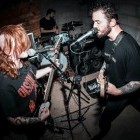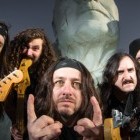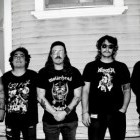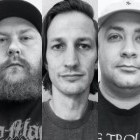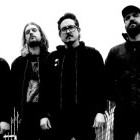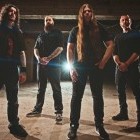
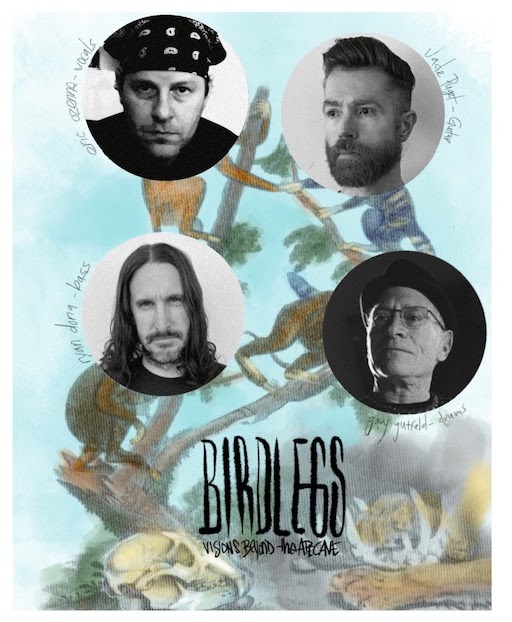
As if cracked open from Northern California’s late-’80s hardcore lineage and dropped into the middle of 2026, Birdlegs brings together Eric Ozenne (The Nerve Agents, Redemption 87, Unit Pride), Jade Puget (AFI, Redemption 87), Gary Gutfeld (Corduroy, The Hi-Fives), and Ryan Doria (Overexposure, Pressure Cracks).
Today, Birdlegs released their first single, a ripper called "Mind in the Margins," which will appear on their forthcoming debut LP for Revelation Records, Visions Beyond the Ape Cave.
In this first-ever interview with the band, all four members break down how the project came together, how their shared roots in ’80s hardcore continue to inform the music, and what fuels the lyrical perspective driving the new record.
The East Bay hardcore/punk roots are obviously strong here. Is there an aspect of what Birdlegs is doing together that you can point to that shows a clear through-line back to that scene and its sound and community?
(Jade Puget, guitar): EBHC is sort of an amorphous concept; some of the bands weren't "hardcore" in the sense of what Birdlegs is doing, but certainly the ethos is there, if not the sound. I still subscribe to that spirit of musical community and individuality that drove that scene back in the early and mid-'90s, as I'm sure we all do in the band.
(Gary Gutfield, drums): I have been listening to hardcore since 1979. It was a way to rebel against my 6 older brothers and what they were listening to. I rebelled against the long hair, bell-bottom jeans, and rainbow tape band logo belt buckles. The friends that I was hanging out with were not much of a community.
I was in a band called Anthrax in high school (years before the metal band). We were 1 of 2 Hayward punk bands at the time. We played our first show opening for the other Hayward band, Social Unrest, and Wasted Youth also played that show. We were awarded that show after losing the chance to play a long-haired rock Battle of the Bands with Social Unrest and us. I guess one of the judges was a fan of the music.
I have always preferred music with a message. That is the line that runs deep.
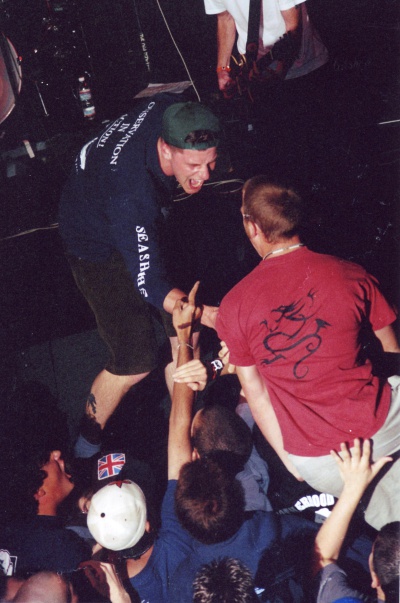
(Eric Ozene, vocals): Gary makes a good point, the message-driven punk and hardcore bands I grew up seeing, like Christ on Parade, the Dead Kennedys, at the Farm, the Mab, and Rock On Broadway, all SF venues or Gilman St. in Berkeley where Rabid Lassie, the Beatnigs, MDC, Corrupted Morals, and Operation Ivy all came up in the 80's.
Fronting the band I was in back then, Unit Pride, I was really drawn to the positive, justice-oriented messages in these bands' lyrics. It was meaningful and purpose-driven. I mean, Unit Pride was heavily influenced by straight edge and the whole Youth Crew movement in those days. That was all message-driven, all positive-leaning. So yeah, a huge throughline in Birdlegs lyrics is those Bay Area bands' profound influence that lingers over, well, my writing at least. Jade may have a different answer than Ryan, as he came up on a lot of Bay Area punk/ hardcore.
The community aspect you are asking about is where the heart of this music and message comes from for me. The Turn It Around documentary about Bay Area punk and the Gilman St. community, that's like watching a high school video yearbook for my teen years, and that...that was community.
So for me, that is the heart of it all. When I think of Redemption 87 and the Nerve Agents, bands I fronted in the '90s and '00s, the heart of those bands is tethered to late '80s Gilman St. and the hardcore kid community, the SR Mosh Crew, the OpIvy guys, [Maximum Rocknroll founder] Tim Yohannon, and just the overall community, you loved it or not, it had heart and for me, thats the through line that is woven all the way into Birdlegs in 2026.
The press materials emphasize that Birdlegs isn’t about resurrecting 1987 hardcore. What does “pushing edges in all directions” mean to you musically and philosophically? Also, why was it important to point that out with the band announcement? Are you worried that people will look at Birdlegs as a nostalgia exercise?
(Jade): If you listen to this album, I think it will quickly dispel any notion of it being a nostalgia exercise. It doesn't sound like Redemption 87; it doesn't sound like straight 1987, although elements of that are represented to a degree. To my ear, it's a group of people who came from different parts of the hardcore and punk scenes of the '80s and '90s, with a love of that music, and who have since added 30 years of musical experience and identity.
I will admit to a bit of nostalgia when I first sat down to write songs for this band, though. It was a muscle I hadn't exercised in a very long time, and, because it had been so long, it felt new again, almost the opposite of nostalgia.
(Gary): I enjoy a wide variety of music. I played in the band orchestra from 4th grade through high school, playing the trumpet and other brass instruments. I was exposed to a lot of different music growing up in a large family and with my dad, who loved swing and big band music. Birdlegs, I feel, is the closest to embroidering all of my influences into one. I hope listeners have a chance to hear that in my playing.
(Eric): I love that you just dropped big band music. One of my favorite songs of all time is Benny Goodman's "Sing Sing Sing." It plays like some kind of climactic chaos. So good.
Three of us have been down the resurrection road in the '90s. There felt like an urgency in those days to help bring back that 1987 sound that so many of us longed for at the time. It was timing. A convergence of lack and presence brought that idea to the surface for R87 members at that time.
I will be the first to say, I loved Redemption 87 , but I don't see the need to rehash what we were doing back then. Jade and I talked about being more expansive in this band. Gary and I have evolved as players together from Said Radio (2006-2010) to now. We didn't explore Japanese drum styles in R87, but we have in Birdlegs. Ryan and I were creating songs and drawing inspiration from the Icelandic composer Hildur Guðnadóttir, who scored The Joker.
To some, it may not sound like it, but my edges are pushed all over. On this Birdlegs album, I drew inspiration from PJ Harvey, Youth of Today, early Talking Heads, the Art of Noise, Siouxie Sioux, Bad Brains, Aldous Harding, Antidote, and TSOL. The intention for me has been to play from the heart, steeped in the hardcore music I love, still with plenty of anger over current politics and American culture, and to ask questions of myself that may or may not resonate with others. It's what I have always done, but pushing the creative edges in ways I have never done, with less finger-pointing and more introspective questioning. You can see some of that on the title track, "Visions Beyond the Ape Cave."
Jade's guitar on this record is unbelievable throughout and not coming at these songs as formulaic as we may have if we were doing Redemption 87 part 2, which we wanted nothing to do with, as much as we didn't want this to be AFI or the Nerve Agents either. We were after something very different, and I think that's here on this record. I mean, look at the song "Devil's Own Grip" really...what is that? It's like Jade's playing from outer space. I wanted to be Fred from the B-52's on that, but you know... It's me, so that wasn't going to happen.
Was there any unfinished business following the breakup of Redemption 87, or is Birdlegs totally independent of that?
(Eric): I'd say very much independent.
(Gary) I have remained close friends with Eric, and when we had the chance to work on a project together, I was All In. I appreciate that we have remained great friends and that we are still making music together.
(Jade): I think Redemption broke up when it needed to. Birdlegs, for me, was just a chance to make music with old (and new) friends again.
(Eric): I totally agree with that, and it's been really fun.
Listening to the advance stream of the record, it sounds like it could have come out in any decade I’ve been listening to hardcore, which, for me, would be the late ‘80s. In other words, there’s a timelessness to the material that I appreciate. The song “Devil’s Own Grip” has an almost new wave vibe to it, and “The Twisted Screws of Now” reminds me of ‘90s melodic hardcore. Talk to me a bit about the woodshedding behind these songs and how it all came together. Was it done remotely, or did you carve out our time in a jam room together?
(Eric): Jade, you want to answer this one? Oh, wait, Gary has his hand raised.
(Gary): Ryan and I did quite a bit of woodshedding together for this recording. The backing vocals were great fun.
(Eric): It was a good time doing those down at Ryan's Nightmare Studio. Thats the name, right, Ryan?
(Ryan): Yeah, Nightmare Sound Studio!
(Jade): For my part, I didn't really have the opportunity to sit in a room with everyone and hash out songs. It was more of a case of me writing some songs, Ryan writing some songs, and then Gary and Eric doing their thing. It might not be the same process as it was back in the day, but I feel like if what you end up with at the end of the day is something you're proud of, it doesn't really matter how you got there.
Jade, your guitar work is described as a return to the darker hardcore tones of Black Sails in the Sunset. Was that a conscious move, or did the Birdlegs material feel like a natural space to revisit in this context?
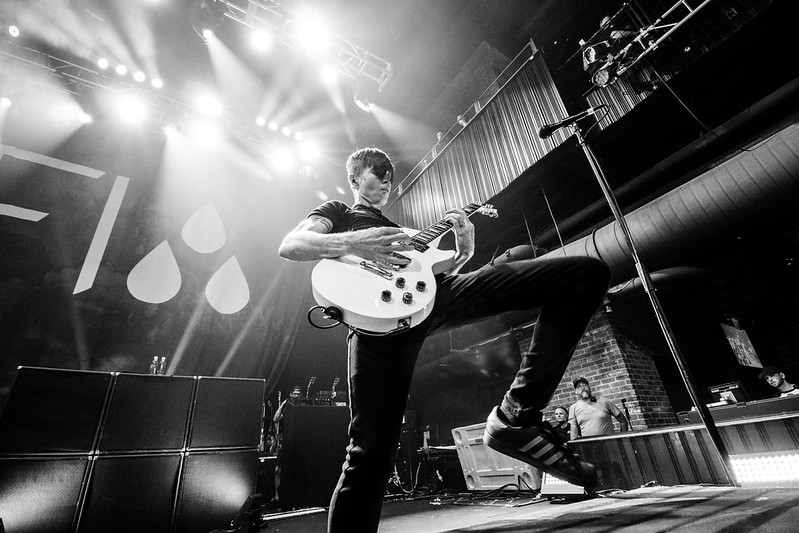
(Jade): I certainly didn't have any intention of playing in a style reminiscent of an early AFI album, I think it's more that I haven't played hardcore in so long that it sort of naturally hearkens back to a time when I did. I very much feel that how I play on these songs represents me now, just in a different context.
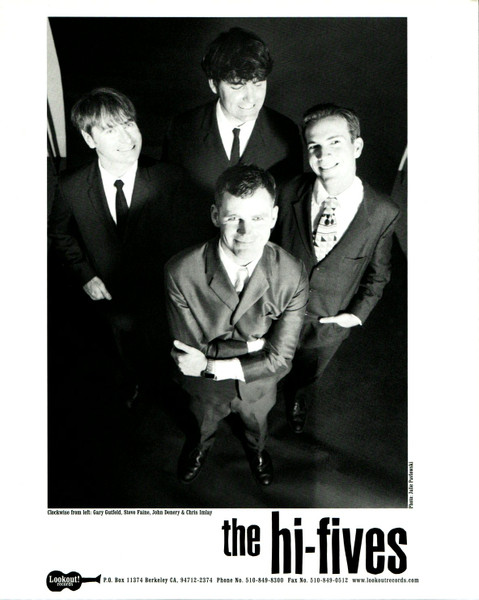
Similarly, Gary, your drumming trajectory has gone from indie rock band Courdurouy (deep cut but on the very important Broken Rekerds) to straightforward hardcore in Redemption 87, with stops in The Hi-Fives on Lookout! Records and the criminally underrated Said Radio, also with Eric Ozenne. How do you think Birdlegs fits into your repertoire?
(Gary): I learned how to play the drums by playing along to punk rock bands of the late '70s through the early '80s. I am influenced by bands such as the Bad Brains, Minor Threat, and English bands/ Oi! bands, such as the Angelic Upstarts, Sham 69, The Damned, The Buzzcocks, representing Ireland, Stiff Little Fingers, and lots of others. You could hear the influences in my playing.
I was given a cassette mixed tape of NYC hardcore bands from Eric, whom I was doing a lot of training with. That tape is probably worth something. It was a scene of music I was missing out on. It was very helpful for what we were doing. I enjoy melodic bands/songs. The Hi Fives were at times just as fast as other hardcore music I have played, but a lot more melodic and sang about other stuff.
I have played in a lot of bands, and I have filled in for a lot of drummers here in the Bay Area. It was a real disappointment that Said Radio did not get the exposure it deserved. You can draw a line at least for me from that band to Birdlegs. The approach that made a big difference in these recordings was that I was influenced by the actual songs that were brought in.
Eric, how has your approach to writing lyrics changed over the years, from Unit Pride in the late '80s to now?
(Eric): I pretty much have the same process I had back to Unit Pride. I would get recordings of the songs and play them over and over, picking up the emotional tone, and kind of allowing what is resonating for me in that.
What really comes to mind around this question, as it relates to Birdlegs, is that I have mostly changed my intention around the point of the lyrics. I am intentionally laying out questions designed more for myself than anything else. This time we live in is so unprecedented and crazy-making that I am asking questions like 'Who are you?' in this time, or "How do I dance in the street wearing my gaudy crown?" when I feel so beat down by negative thoughts that originate from an abusive stepfather. One of my favorite questions in the song "Apricity" asks, "What’s in your bones in this here and now?" I think many people at this time are asking themselves quietly and not so quietly, this question.
All of these lyrics are direct descendants of the lyrical content of bands I grew up on, that have really shaped me: Youth of Today, Operation Ivy, Straight Ahead, and 7Seconds.
The actual writing style of the lyrics is more open to me being me and being weird and having fun. You can see that begin for me in the Nerve Agents songs starting on Days of the White Owl. The first Nerve Agents s/t record is a carryover lyrically from where I was at in Redemption 87. I leaned into the more creative side of myself in those later Nerve Agents records, but it really comes off on this Birdlegs record. I really enjoy writing like that; it feels more authentic.
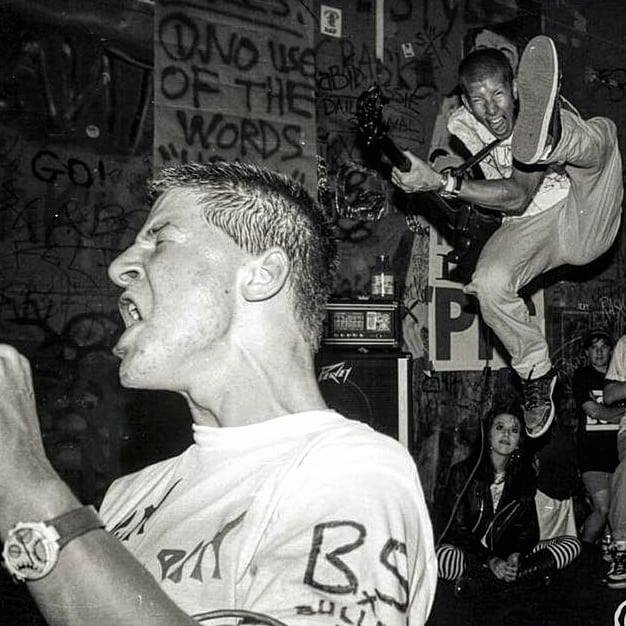
Ryan, you are kinda the odd man out here, but to be honest, your basslines are crucial to the sound. How do you feel you fit into a band whose other members have decades of history together?
(Ryan Doria, bass): Honestly, that part hasn't really felt like a "thing." Yeah, they have all been in bands together before, but if anything, I think that contributes to a really smooth writing and collaboration process. Starting a band can be tricky, with different ideas and personalities, but this feels natural and fun, which is what it's all about!
The crazy part is, the records these gentlemen and their friends produced in the '90s are what got me into hardcore/punk and had a huge impact on my playing and writing style. So in a way, they recruited me a long time ago - Like a kid who's now old enough to work for the family business.
(Eric): Let me just say this, Birdlegs does not even become a thing unless Ryan shows up one day in the form of a random written message that I received in the mail. His presence in this band is crucial in so many ways. His bass playing is fantastic on this record. He brings tons of experience from his other bands, Overexposure and Pressure Cracks.
Ryan has taught me a ton about current ways of doing things, since so much has changed since 2010, when Gary and I were last in Said Radio. Plus, Ryan has put up with me the whole time, all while being such a generous and wonderful host when we'd practice or record down in Orange County. It's been one of the best band experiences I have had, and Ryan right out of the gate is a huge part of that.
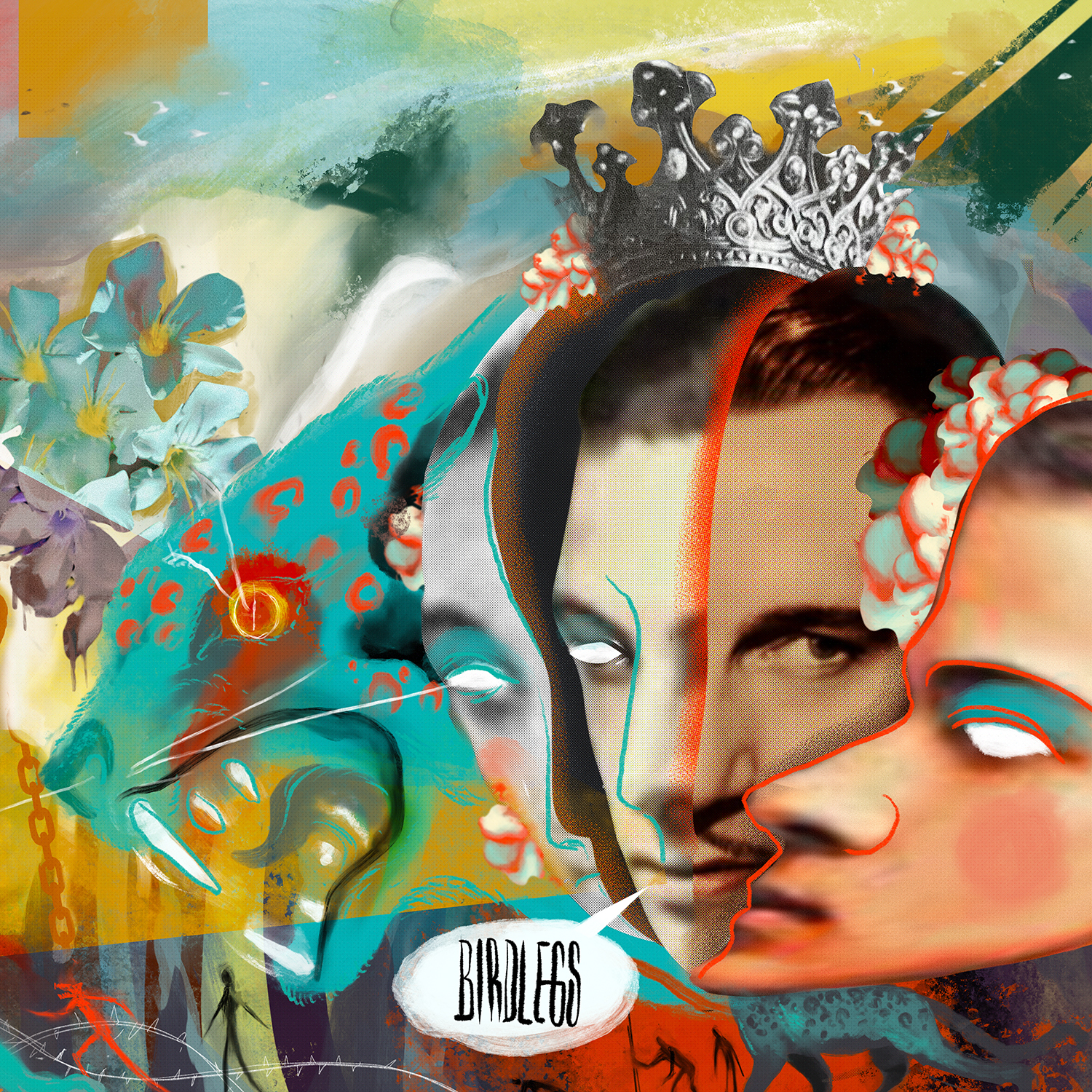
“Mind in the Margins” tackles the destabilizing force of social media. Eric, you ask, “Do you mind your mind being siphoned and sculpted for profit and experimentation?” How do you view hardcore as a form of resistance in a time when bands and labels have to rely on the exposure that social media companies offer to help their releases get attention?
(Eric): This question makes me really sad. In a way, it contains what I am after in the song. These are not anti-tech lyrics. I use tech. Birdlegs uses tech. Revelation Records uses tech. The idea in this song is to question what is happening to me when I use tech, when we all use tech, particularly social media, search engines, and A.I. It’s about questioning and not just unwittingly going along with it. That is why hardcore is a form of resistance.
While our social fabric erodes under the creation of and use of these crazy addictive tools, social media, A.I., and who knows what else is on the horizon and yet to come, we can speak our thoughts of resistance to one another through hardcore lyrics and in person in hardcore communities, at shows, coffee shops, record stores, and discuss various forms of resistance to things such as social media. We can inform one another by questioning and discussing the manipulative pitfalls and exploitation that exist in this tech, which some may not be aware of. This is where the rising up with a collective voice begins to take hold, or maybe that resistance comes to the surface on an individual level. As individuals, we get to choose how we respond, how we wield these tools of technology and our own minds in our lives, for our bands, record labels, and any other business we have.
Sadly, there is an addictive nature to social media and A.I. People don’t like this topic, and there is often a scramble to defend the use of it, much like the defense of drinking or using drugs. I would encourage anyone to question that reaction if it's coming up for you. Is that kind of attachment what you want for yourself?
If we have even a clue that these tech companies are using us, shaping us, addicting us through social media, A.I., and whatever else, then we can start by asking ourselves these important questions: “Do you mind your mind in the margins?’ unaware as to what is being done to you. Do you even care? Maybe not. Do you want to be psychologically hooked to social media, to be sculpted and sold to advertisers, to desire instant gratification so you can be sold off as a product? Is this how you wish to be in your life? They are good questions to ask.
With so much unfolding so fast around us, tech companies are taking advantage of people through the unregulated creation and use of technology woven into every aspect of our lives. Is this something we are down with? Can we not use tech while also pushing back against these wealthy people who are destroying society? There is a place for resistance in hardcore, to push back on the status quo, rather than just following the herd. Look at the straight edge movement of the '80s or the riot grrrl movement of the '90s, veganism in hardcore, bands choosing not play on really great bills or venues because the venue doesn't or isn't doing All Ages shows.
Resistance starts with questioning ourselves. The issue of social media, A.I., all too powerful big tech, is not simply a black and white, or ultimately right or wrong issue, but In its currently unregulated state of existence, as it runs amok destroying life as we know it, it is a hornet’s nest of massive issues of enormous complexity. I could rail on this all day. If you want to understand this more and even better than I am explaining it, follow the current lawsuits against TikTok, Facebook, and Instagram, etc.
Go read Jonathan Haidt, or visit the Center for Humane Technology website. I started watching the documentary The Social Dilemma, which you can stream on Netflix. I would suggest starting there. This is probably the most important issue out there. It takes a lot of courage to do this kind of reflection when, socially, the narrative at large says that we have to 'rely' on social media or we become irrelevant. People, bands, labels, are still going to use it, but can't we push back on the horrors of this tech? I think we can. And now I will shut up. Next!
How important was partnering with Revelation on the record? Tell me a bit about your relationship with the label throughout the years.
(Jade): When I first discovered hardcore, Revelation was THE record label that I associated with all my favorite bands. In my history as a music fan, there's only a small handful of labels that are truly iconic, and Revelation is one of them. I'm very excited to be able to put something out on Rev. I never thought it would happen.
(Gary): I have always been a big fan of the bands that Revelation was putting out and still do today. I have always wanted to be in one of those bands. I appreciate the West and East coast representations.
(Eric): Rev is the gold standard of hardcore record labels for me. The label has been around throughout my entire hardcore life. Jordan Cooper, who founded and still runs Rev, let me sell records for the label when he lived on the East Coast, and I was on the West Coast. All of those early releases from 1987-1989, I would sell to kids in high school at lunch at the Loard's Ice Cream shop. At that time, those releases really shaped who I became and what Unit Pride turned into.
I owe so much to Jordan and Ray [Cappo] for putting out all those releases, and to Jordan for believing in me and my bands throughout the years. Rev was really great with the Nerve Agents, too, and to be able to come back around to the label with Birdlegs, it just feels like a kind of coming home. Such great people at the label who care about the bands and treat their releases with great respect, even years after a band has disappeared. It's pretty unique, and I feel fortunate to be a part of Rev's history.
I would be remiss if I didn’t ask you about what you see Birdlegs doing beyond releasing this record. Is this record a one-off or will there be more material recorded? Can we expect live shows soon?
(Gary): I have a long list of songs I have been hard at work learning. I look forward to another longer (more songs) record with Revelation.
(Eric): The four of us each have so much happening constantly, we all have commitments to our work and family obligations, while living in 3 different states, so our current plans consist of getting everything that goes with this record done and out. We already started work on songs for the next album. We currently don't have any plans to play live.
Since you all have been involved in the world of hardcore and punk for so long and branched out into other facets of life, both musically and non-musically, do you feel that punk and hardcore ever really leave you? What about it have you carried into other endeavors?
(Gary): No, It's kind of the way I live my life. Punk and hardcore music are in my blood. Music with a message will always get me to listen. I have influenced my nieces, nephews, and kids. I give free drum lessons too. The community is full of sincere, nice, legit people. It's a community where I can hang out with friends and strangers alike and have a great time. Keeping that fire burning.
(Jade): I joined Redemption 87 in 1995 because of my love of hardcore, and when I started writing for AFI I brought that love of hardcore to that as well. Discovering this music as a kid in the '80s, it made such a profound impact on me that it will always be a core part of my musical DNA.
(Eric): Hardcore, punk, that ethos lives within me always. Whether I was actively in a band or advocating for a person, I was helping out as a social worker. There is a continued reflection and challenging of self and others that I feel becomes necessary in life. As a hardcore kid, I began to learn that and ultimately came to understand that for myself. Everyone is going to have a different definition of what hardcore or punk or whatever genre it's called to them.
So, not resting on the collective values of the herd because it feels safe, constantly checking to see where I stand with my own personal values, while also checking myself to make sure I am not acting like a knucklehead in isolation from others. Hardcore, punk, whatever you want to call the ethos, to me, it's always been the same thing at the heart of it. It's questioning, it's resistance, it's change. Its acceptance of difference. Its community.
***
Visions Beyond the Ape Cave will be out on April 10th via Revelation Records (pre-order).
Tagged: afi, birdlegs, overexposure, pressure cracks, redemption 87, the nerve agents