There’s always been a certain rigidity to crust and neocrust—an unspoken rulebook built around guitars, distortion, and a very specific sonic framework. But Painist is the kind of project that exists to ignore all of that.
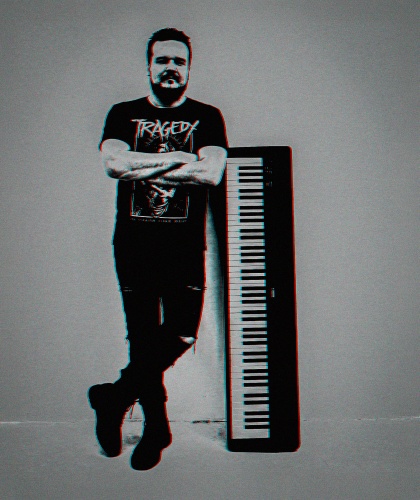
Born out of a deep dive into noise rock and experimental acts like Swans, Daughters, and Chat Pile, Painist flips the script on what heavy music can look like. Instead of guitars, the foundation here is piano—distorted, layered, and pushed into territory that feels both unfamiliar and oddly natural. “Breaking some rules was possible,” the musician behind Painist explains to No Echo, pointing to those bands as proof that even the most established styles aren’t as locked in as they seem.
The result is something Painist describes as “piano crust” or “crust punk without guitars,” a phrase that sounds almost contradictory until you hear it in action. Drawing influence from neocrust staples like Tragedy, Ekkaia, Habak, Morrow, and Hongo, the goal wasn’t to simply replicate that sound, but to evolve it. “I felt that I wasn’t able to offer something new to the style if I kept playing guitar,” he says. “I found a completely new place when I started trying to play power chords on the piano.”
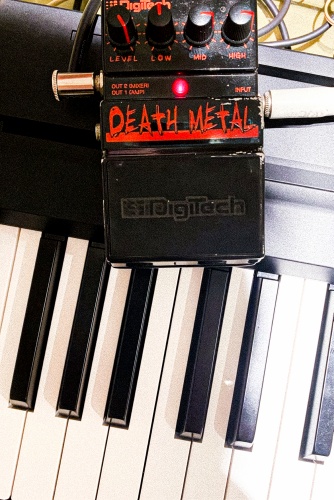
That shift didn’t just change the instrumentation—it reshaped the entire songwriting process. By running piano through distortion and stacking melodic layers in a way that mirrors neocrust’s dense arrangements, Painist unlocked something different. “With the piano, I think I achieved not only a new sound, but also melodies and chord progressions that are not clichés or expected.”
The project’s debut release, Too Many Clunkers, is the full realization of that idea. Recorded in a home studio after traditional studios dismissed the concept outright, the record is as much about persistence as it is experimentation. “They were more worried about my piano damaging their Marshalls than helping me bring this project to life,” Painist recalls. Despite having a workable solution to process the piano signal through guitar amps, the pushback ultimately led to a better outcome. “In the end, it was much better. I improved my home studio and got a great result.”
With the music out now, Painist hopes that it stands as an open invitation to others to do the same. “I hope this project encourages other people to try weird ideas or things that might be rejected at first,” he says. “If you believe in it, you’ll find some crazy people who will follow you.”
***
Painist on social media: Facebook | Instagram

Tagged: painist