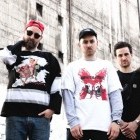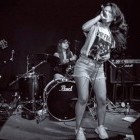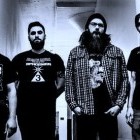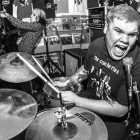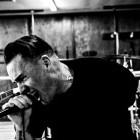

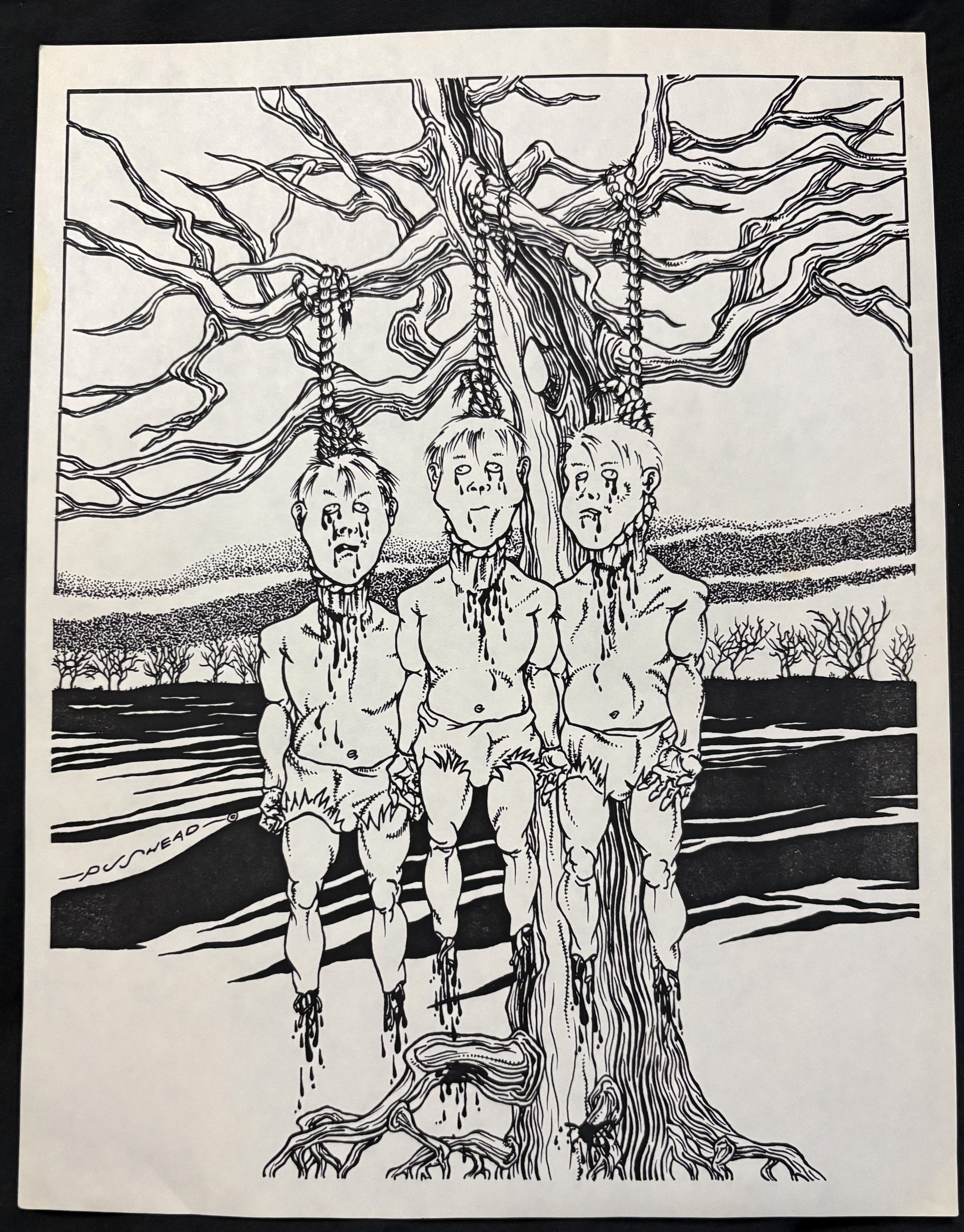
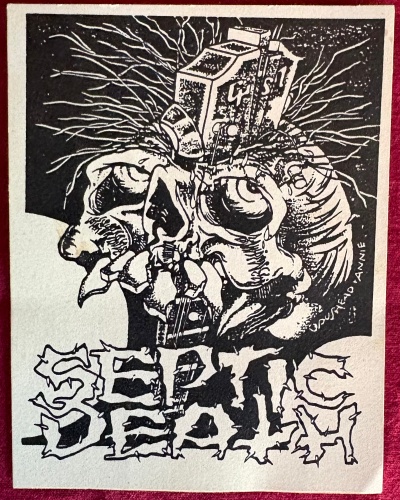
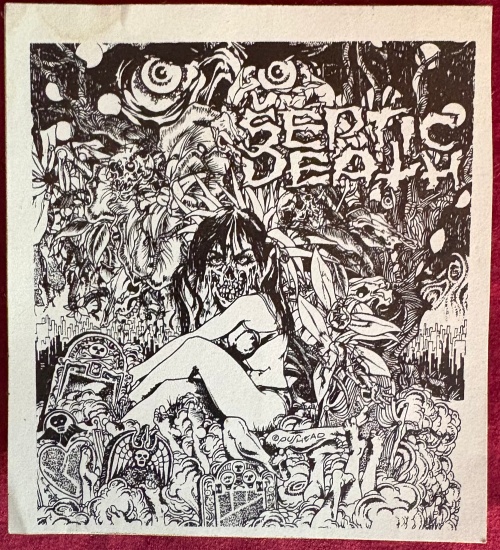
Everyone, of course, knows Septic Death because of Pushead's iconic artwork, but the band was much more than a visual legacy.
We caught up with drummer Paul Birnbaum to discuss his experiences in Septic Death, growing up in Boise, the band's recent reissues, whether he ever played blast beats, and much more.
A Hardcore Conversation continues here on No Echo and on the Hardcore Conversation YouTube channel.

You are Paul Birnbaum, drummer for Septic Death, Attitude Adjustment, and more, correct?
Correct.
What was it like growing up in Boise, Idaho?
It was pretty terrible. My family moved there in 1979 from Southern California right when I was starting seventh grade, and it was complete culture shock. This was (obviously) way before the internet and before MTV. It was a lot of rednecks and Mormons. Thankfully, I met some other California transplants who were into skateboarding.
Once MTV came along in 1981, things got a bit more tolerable. As much as (most) people like to hate on MTV, it was instrumental in bringing music that wouldn't normally be played in a place like Boise, Idaho. Once people there started getting into newer music instead of the '70s rock that dominated the local radio stations, a scene of punks and new wavers started to develop.
Yeah, MTV was actually pretty cool in the beginning. Did you grow up in a musical household?
Yes and no. My dad listened to classical music in the car, which really made me not like classical music. It wasn't what I wanted to hear as a kid. My mom seemed to enjoy Neil Diamond and that sort of thing. I also have two older sisters who were both into music, but just what was popular at the time. Nothing cutting edge or "weird." Still, they taught me to appreciate music and made me excited to buy records.
How did you get into punk and hardcore specifically?
As I mentioned previously, my two older sisters were into music, so that's how I started listening. Before moving to Boise, I could hear "new" music on the radio. I was mostly hearing power pop that was getting popular, like The Cars, The Knack, and, of course, Devo. I really liked it and just wanted more and more—the weirder, the better—but I also wanted it to be more aggressive than regular radio rock.
Once I moved to Boise and met other California transplants, who were all older than me, I started getting into punk rock. The earliest bands that made a lasting impression on me were X, Dead Kennedys, and The Gears. This was around 1980 or '81.
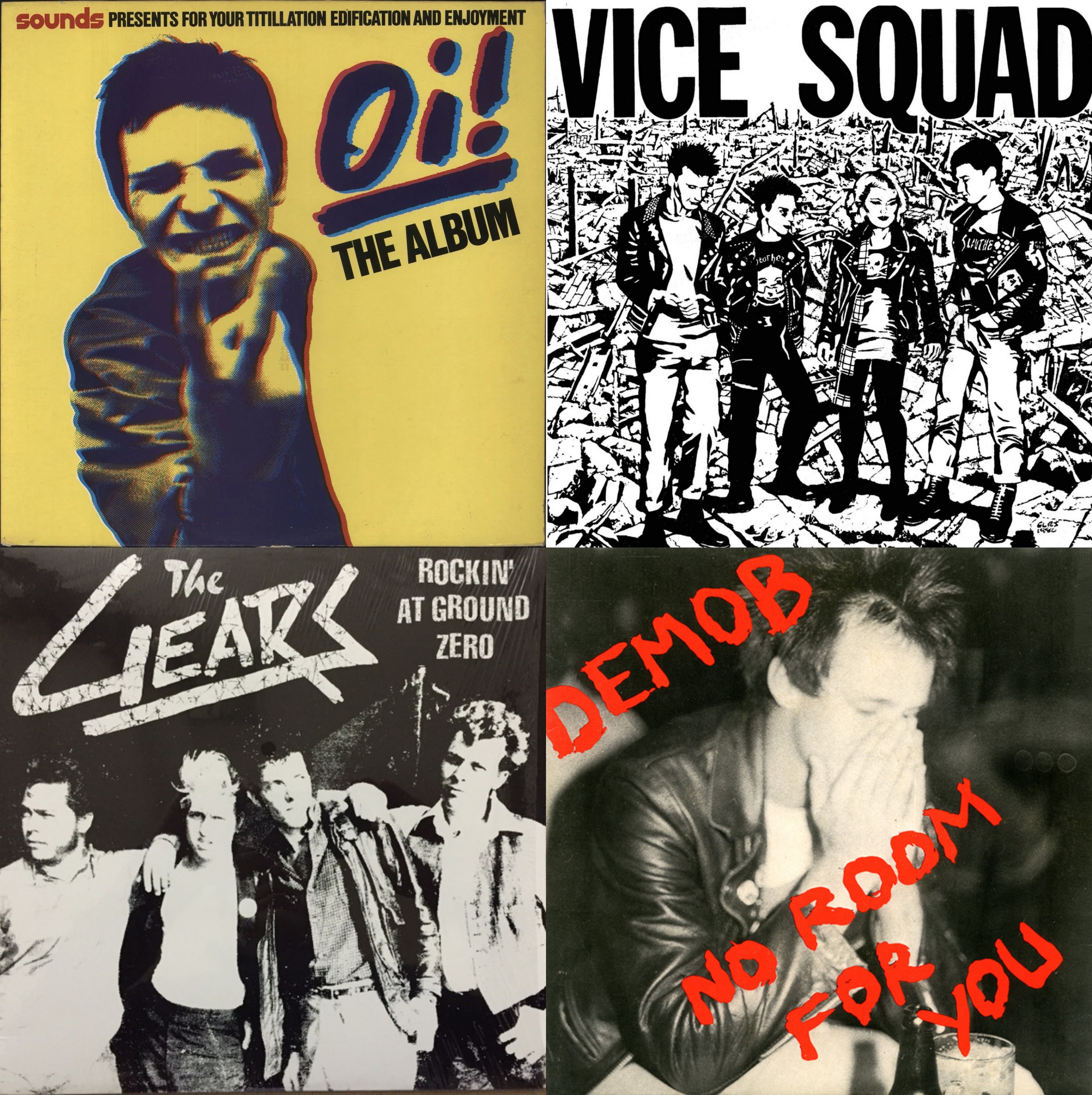
I then borrowed a homemade tape that had the first three Discharge 7-inches, the first Vice Squad 7-inch, the first Demob 7-inch, a bunch of Cockney Rejects, Not Sensibles, and the first Oi! The Album compilation. I was hooked.
Getting into hardcore was just a natural progression. Skateboarding was a very aggressive sport, so when the music kept getting faster and more aggressive, it just fit in seamlessly.
What got you into drumming, and who were some of your influences?
The thing that really made me want to be a drummer was the drum solo on KISS' Alive!. I started playing drums in school band in fourth grade, which was pretty boring, but it taught me the basics.
Like most kids in the late '70s, I was really into Star Wars and had a bunch of the toys. I'd set up the toy boxes like drum toms on my bed and pretend I was playing a drum set.
My earliest influences were Peter Criss and Bun E. Carlos from Cheap Trick. I used to try to play the beginning of "Ain't That a Shame" from Cheap Trick at Budokan on my toy-box drums.
When I moved to Boise, the school band was actually a year behind what we were doing in Southern California, so it was super boring. I played through seventh and eighth grade, then quit.
In eighth grade, one of my friends, who was also a drummer in the school band, got a drum set. I'd go over to his house, and we'd mess around on it for hours. That's where I first started figuring out how to play a real drum set.
In the spring of 1981, I finally convinced my parents to buy me a kit. I'd play that thing for hours every day. By then I was getting more into punk rock and would try to play along with the first Circle Jerks LP, the first Adolescents LP, Black Flag's Jealous Again 12-inch, and later the Articles of Faith songs from the Charred Remains cassette compilation. I was really into Robo, Casey Royer, Lucky Lehrer, D.H. Peligro, The Neos, Jeff Nelson from Minor Threat, and more.
Tell me about the high school marching band stuff.
As I mentioned, I was in school band through eighth grade. I only ever had to do one marching band event. It was some parade, and I played bass drum. We also had a few competitions, but by then I'd really stopped trying. It was boring and not what I wanted to be doing.
READ MORE: King Coffey Reflects on Early American Hardcore and the Butthole Surfers’ Lost Album
How did you meet Pushead [Brian Schroeder] and the rest of Septic Death?
Once I moved to Boise, I met other California transplants. The first person I met was a guy down the street named Brad. He had a quarter pipe in his yard, so we'd skate almost every day after school.
Brad was already friends with Mike, Septic Death's bassist. Mike would show up at Brad's house on his bike with his skateboard, although most of the time he just wanted to go off with Brad and smoke weed.
From there we met a guy named Kerry, who seemed to know everyone. He'd worked at the Boise skatepark before it shut down, and if I remember correctly, I met Pus through him.
Eventually we heard about someone who had built a half pipe out on the outskirts of town. You had to drive down a dirt road to get there, but that person turned out to be Onj. He'd recently moved from Southern California, and his parents had a couple of acres of land where he'd built a really nice half pipe.
We became friends with him and found out he played guitar, although he was more of a metalhead. Thankfully, he agreed to be in a punk band.
What did you think of Pushead's artwork when you first started seeing it?
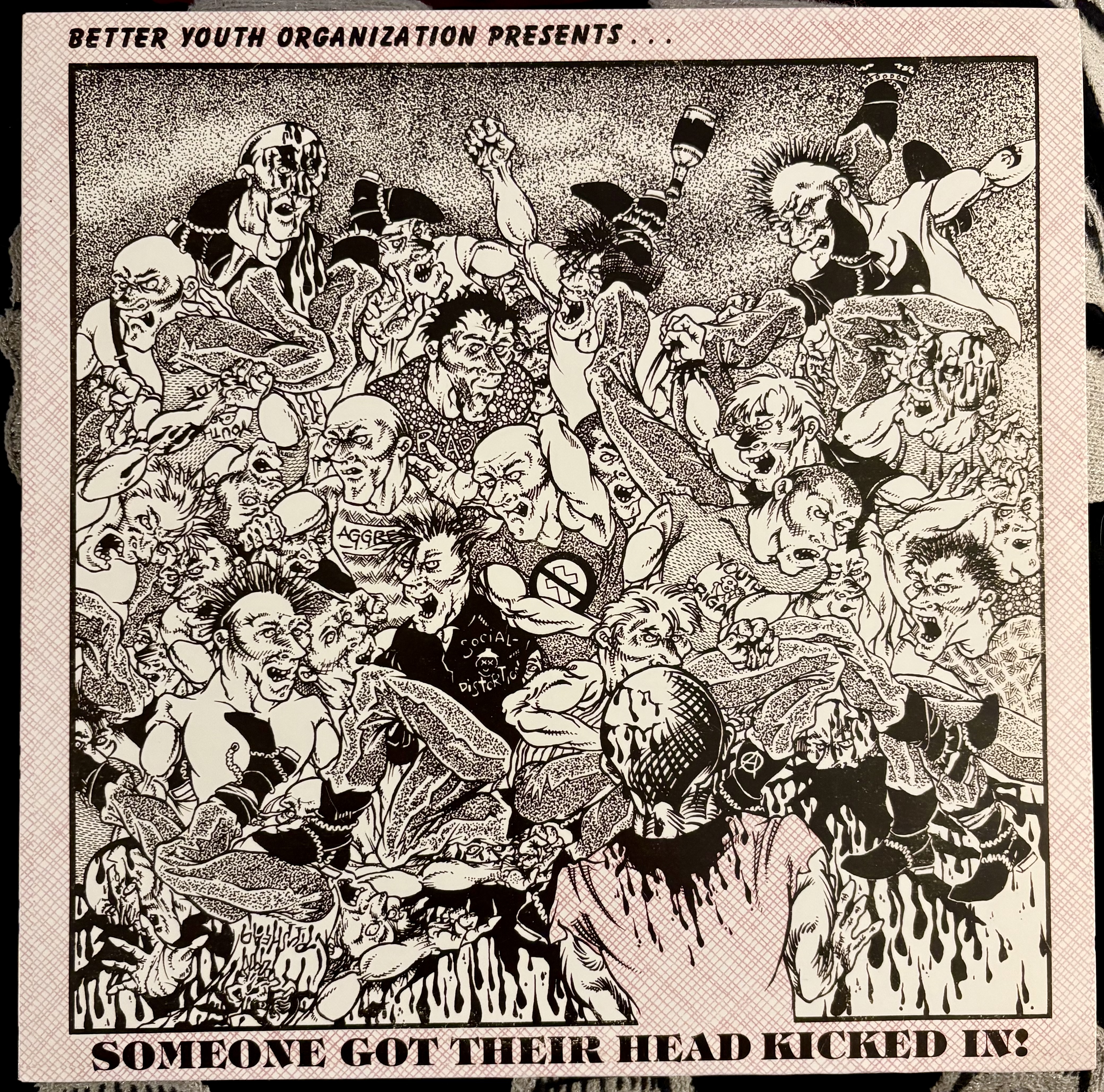
I really liked it. He used to draw a lot of punks, and that's still my favorite stuff he did. Later he started drawing babies and skulls. I liked that work too, just not as much as the punk drawings. Eventually it became a little too skull-heavy for my taste.
So you guys were all skaters?
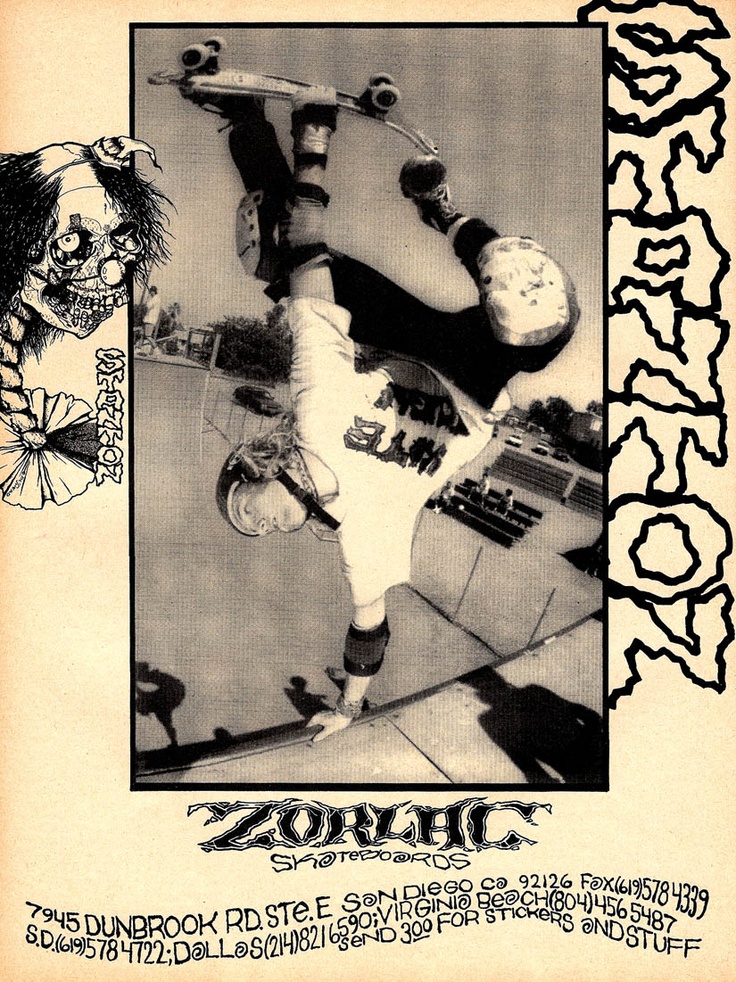
Yes, we were all skaters. That's how we met, and skateboarding was really the glue that held our friendships together throughout the '80s.
What did the locals think of you guys back then?
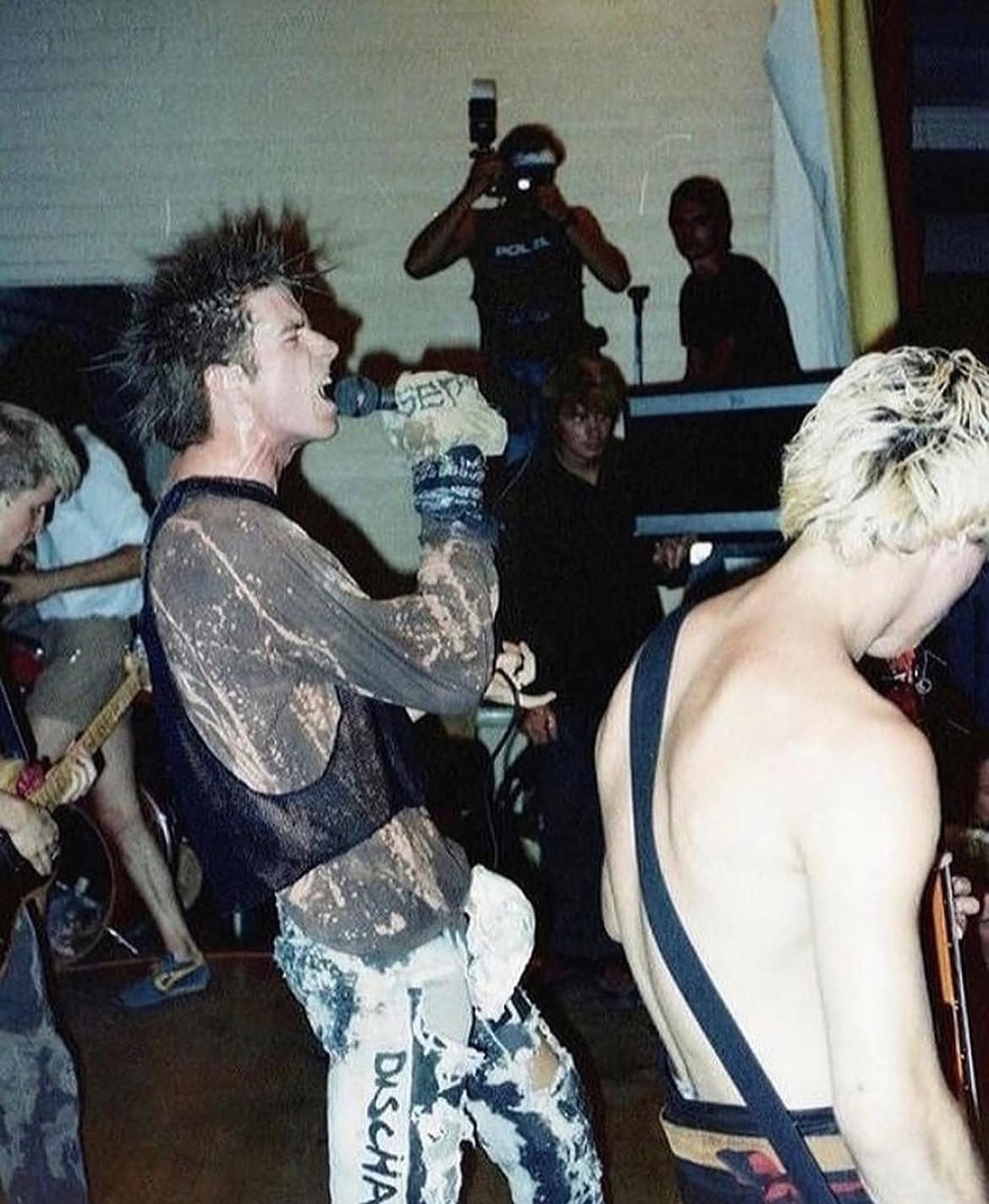
That's a good question. Obviously some people liked us, and some didn't. The scene in Boise was really small. The people who came to shows weren't necessarily all punks. A lot of new wave fans would show up because there just wasn't much to do in Boise, and there were even fewer punk or new wave shows.
So we'd all go to whatever was happening and support the other bands, whether they were punk or not.
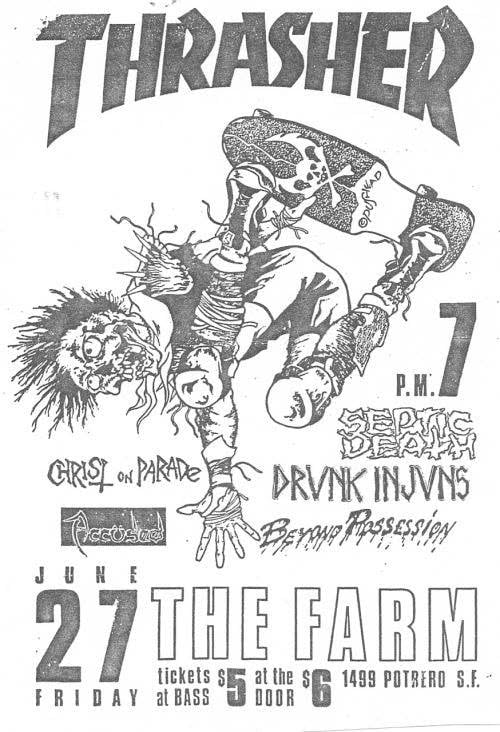
What inspired the Septic Death sound, and how did you end up playing so fast?
We were all into the early Dischord releases, the original Touch and Go records, The Neos, Rudimentary Peni, Discharge, Disorder—anything that was really hard and fast. We couldn't get enough of it.
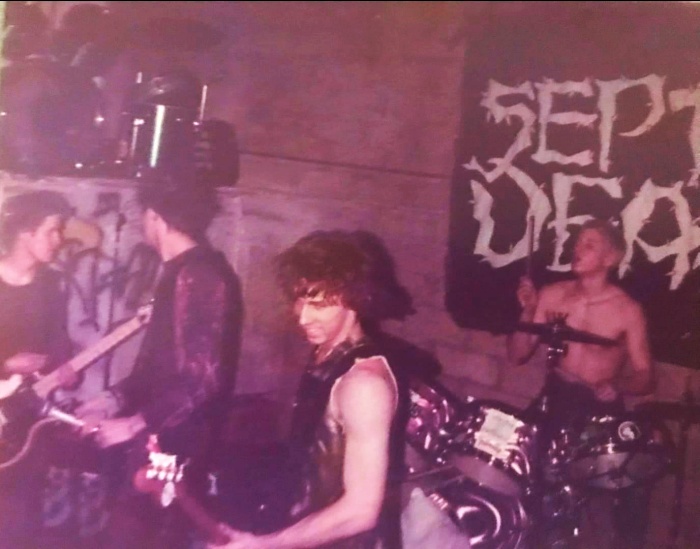
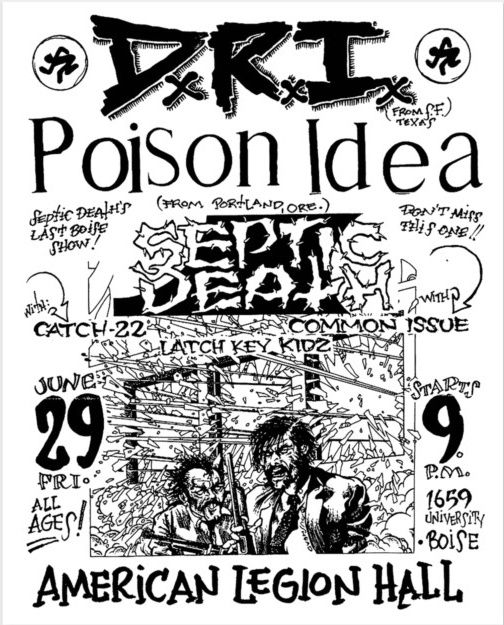
We wanted Septic Death to sound like that, and over the years we just kept getting faster and faster. Our first rehearsal was in 1981, but we didn't play our first show until 1983, so there was plenty of time for the band to develop before anyone outside our circle heard us.
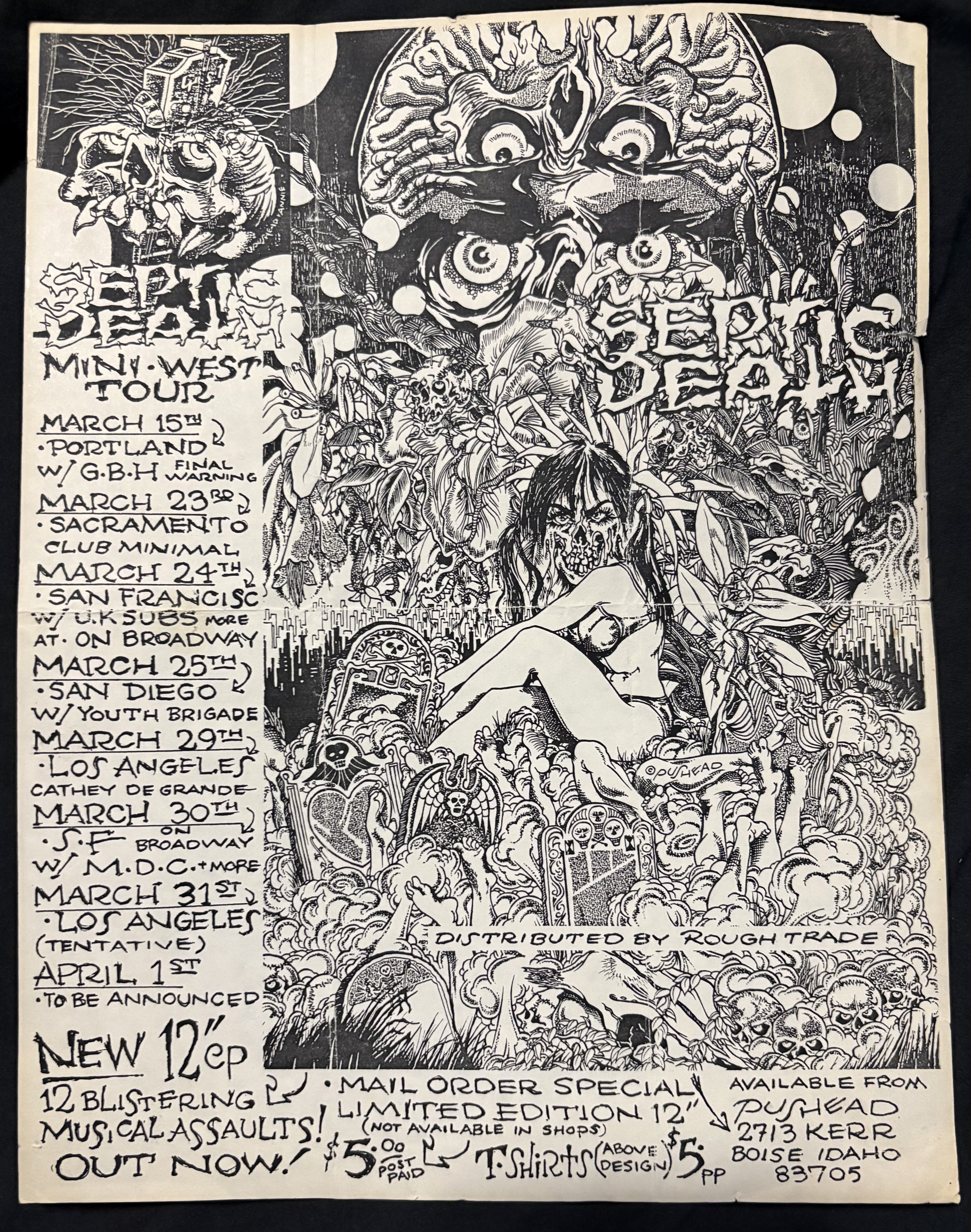
Where did that blast beat style come from?
It's funny that you say that because I've never played blast beats. There are a couple of songs where I do something on the hi-hat, snare, and kick that isn't the traditional way of playing, but it was never a blast beat.
Most of the songs are just a really fast traditional beat—one hit on the kick drum, one hit on the snare, and two hits on the hi-hat. I'm not sure if that makes sense.
When we first started, the songs were a little slower, and I could do two hits on the kick, so it was like: boom/click – boom boom/click, etc. But at some point it got too fast for me to do the double hit on the kick drum.
Ah, okay, that makes sense. "Terrorain" and "Quit" definitely sound like they have blast beats to me, but now I know! How did songwriting work in the band?
Most of the songwriting was collaborative. Usually Onj would come up with a riff or two, Pus would help arrange things and suggest a fast part here or a slow part there, and Mike would write riffs or suggest changes.
I always tried to write drum parts that complemented the music rather than simply keeping the beat or tempo.
As far as the music was concerned, we all contributed. No one ever showed up to practice with a complete song already written. Everything came together during rehearsals. Mike wrote parts, and even I wrote some. Pus wrote all of the lyrics.
Apparently Septic Death only played a handful of shows, including one at a local pizza restaurant. Is that true, and what do you remember about that first show?
Correct. We didn't play a lot of shows because there just weren't many happening in Boise. And Boise really isn't that close to any bigger cities. It's about a seven- or eight-hour drive to Portland, five or six hours to Salt Lake City, and around 10 hours to San Francisco.
Our very first show was at a place called Brass Lamp Pizza. They normally had cover bands playing on weekends. Our friend Cathe was involved in the local music scene and sang in a new wave cover band. If I remember correctly, she either won some kind of party at Brass Lamp or it was her birthday.
Anyway, she knew the cover band that was playing that weekend and convinced them to let us play a few songs before their set. Septic Death and our friends in Dissident Militia each played three songs.
There weren't any flyers because we didn't even know we were playing until maybe the day before. There were only a couple of punks there who weren't in the bands, plus a few very unamused pizza customers who had to endure us while they were trying to eat dinner [laughs].
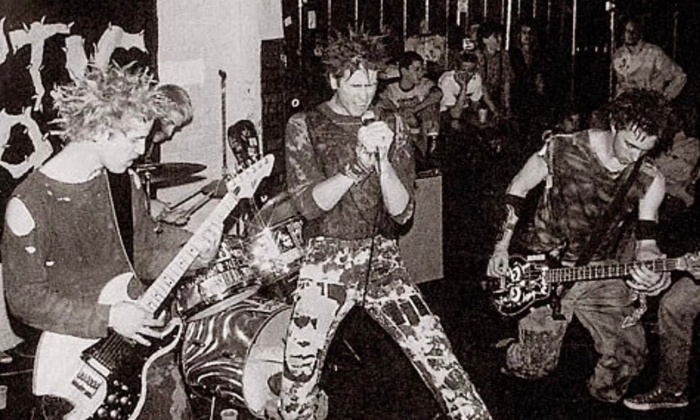
Nice! Tell me about recording Need So Much Attention • Acceptance of Whom. Where was it recorded, and what do you remember from those sessions?
It was engineered by a guy named Homer Wise. If I remember correctly, we knew him because we'd rented PA equipment from him for shows. He had a small studio setup. I think it was only eight tracks, maybe 12.
There were actually two recording sessions. During the first one, I remember being really nervous, and I think Onj and Mike were too. It shows. That session was okay, but not great. So we went back for a second session to redo the songs we'd already recorded and add a couple more. That went much better. Beyond that, I don't remember much. I don't think I was there for any of the mixing.
Can you tell me about Common Issue?
Common Issue was basically Septic Death with Annie singing instead of Pushead, and we just played covers. It was a band we quickly put together to open a show, and we only played five songs: SSD's "Glue," the Misfits' "20 Eyes," Minor Threat's "Out of Step," Necros' "I Hate My School," and "Stepping Stone."
We only played one show, opening for the FU's. I used to have a live recording of it, but it's long gone.
We also put together another band called Skid Marks to open a different show. I played guitar, Mike played drums, our friend Ted played bass, and our friend Kerry sang.
The idea behind Skid Marks was that it was the brown streaks left in your toilet after you flush a big poop [laughs].
We played covers and rewrote the lyrics to fit the band's theme. For example, we did Black Flag's "Six Pack," but every time they sang "Six Pack," we changed it to "Skid Mark," and rewrote the rest of the lyrics to be about skid marks. We also turned "Three Blind Mice" into "Three Skid Marks," and so on.
I actually still have video of that show, but for some reason there's no audio.
How did Septic Death come to an end?
Well, we never actually broke up. Technically, we're still a band, but there will never be any more live shows or new songs.
Nice. What bands were you involved with after Septic Death?
I've continued playing music my whole life. There were a couple of times when I took a few years off, but I always came back to it. Let's see if I can remember everything.
- Skull Diggers (1985) – Misfits-influenced band. I played drums and Onj played bass. We released one demo tape.
- LD50 (1985) – Hardcore band. I played bass and Onj played drums. No studio recordings, but I have at least one live recording.
- The Pugs (1982–1987) – Punk band. They'd already recorded a demo before I joined. I played bass from around 1985–1986.
- Black on Black (1985–1986) – Punk/goth band. I played guitar. No studio recordings, but I have at least one live recording and possibly a rehearsal tape.
- House of Dolls (1986) – Post-punk/punk band. I played guitar and sang lead vocals, while Onj played bass. We never played live because I moved to San Francisco in April 1986. I still have a rehearsal recording.
- Attitude Adjustment (1986–1989?) – Hardcore/metal band. I played drums and appear on the band's first 12-inch, but I quit before the European tour. It became a little too metal for my taste.
- Haggis (1991–?) – Punk band. I played guitar and sang lead vocals. I'm on the first two 7-inches, then I left. They continued after I was gone.
- Potato Potato (1993) – Punk band. I played drums. We released a cassingle and contributed a song to a Boise compilation LP.
- Humorgod (mid-'90s) – Punk/melodic band. I joined as second guitarist after the band had already released a 7-inch and cassette. I think I have a live recording or two from that period.
- Static (1993–1996) – Solo punk project where I played every instrument and handled vocals. Never performed live. Released four cassette tapes.
- The Gordie Howe Trio Unit (1997–2004) – Hardcore punk band. I played guitar. We released a demo tape, a CD, and a posthumous LP limited to 100 copies that just came out this year (2026).
- Little Miss and the No-Names (2009–2012) – Punk band. I played guitar and Onj played bass. We released a demo tape, two 7-inches, and appeared on a Boise compilation cassette.
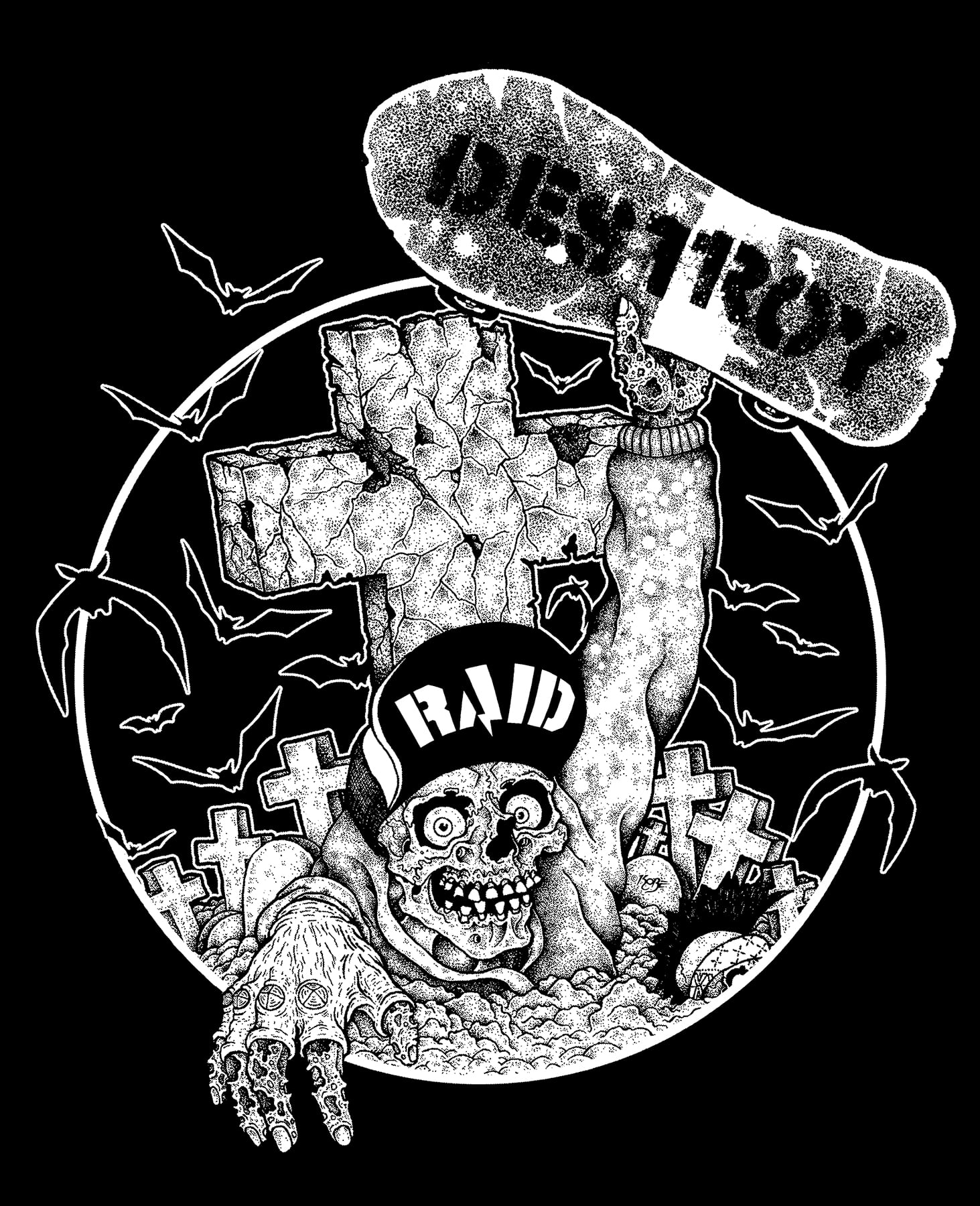
- Raid (2009–2016) – Hardcore punk band. I played drums and Onj played guitar. We released a split 7-inch, a split 12-inch, and songs on a Boise compilation tape.
- Dirty Protest (2012–2016) – Hardcore/crust band. I played guitar. The rest of the band was based in the Netherlands, so I'd travel to Europe twice a year to tour, and they came to the U.S. once for a West Coast tour. We released a split 12-inch with Raid.
- Deaf Locals (current) – Hardcore/punk/ska band. I play drums. No live shows or recordings yet.
- The Davenports (2006) – Another solo project where I played all the instruments and sang. I had a couple of friends contribute guest parts. Released one cassette.
Wow, that's a big list! Are you still in touch with everyone from Septic Death these days?
Yes and no. As you can see from the list of bands I've been in, Onj and I have continued playing music together quite a bit over the years. Until recently, he was the person I stayed in touch with the most. I still talk to Mike every now and then, but I rarely talk to Pushead.
The recent Septic Death reissues have generated a lot of discussion among fans. Did the band members have any involvement, and were you happy with how they were handled? Also, did you get any copies?
Oh geez... okay, let me start by saying that every Septic Death release after the Kichigai 7-inch (1988) has been done without my prior knowledge or my consent.
This latest reissue of Now That I Have the Attention What Do I Do With It? was done without my knowledge. I didn't know about it until I started seeing photos online. The same thing happened with the four different versions of the Chumoku LP that were released in extremely limited quantities and only made available to people who attended Pushead's private Comic-Con event.
When this latest reissue came out, I asked Pushead and Onj why I wasn't told about it beforehand and why I didn't have any say in it. Their response was basically, "Too bad. It's happening whether you agree with it or not."
Around 2002 or so, the band discussed—and agreed—that there would eventually be a reissue. At that point it was supposed to be a 20th anniversary release through Prank Records, and it was going to be an unlimited pressing that would be available everywhere for anyone who wanted a copy.
In fact, I even had to give Prank my Social Security number because it was assumed the band would actually make money from the release and I'd have to pay taxes on those earnings.
That release never happened, and then the Chumoku LPs started coming out with a Prank catalog number. I assumed those were the records we'd talked about years earlier, just being released in a completely different way. Well, I was wrong.
Then this latest reissue came out, but again, not at all the way we'd agreed. Prank is distributing it, but it has a Pusmort catalog number. It's all kind of confusing, and it isn't at all how we discussed it happening. I don't agree with it.
If it were up to me, the reissue would be available everywhere for anyone who wants a copy. It would also be on all the streaming platforms so people could actually hear it and buy the songs or the album if they wanted. I don't think we need a bunch of art cards, puzzles, or signed extras. Just release the album, make it affordable, and let people get it.
I also find it ironic that the original Now That I Have... LP was a U.K./European release, and now this reissue is completely unavailable in Europe.
As of today (July 14, 2026), the reissue is completely sold out, and I still haven't been sent a copy. Also, after Pushead and Onj told me, "Too bad," I responded to both of them, and they've simply ignored me.
I'm sorry to hear that. Do you still listen to punk and hardcore?
Absolutely! It's still my favorite music. I still listen to it, I still play it, and I still go to shows. Forever and always.
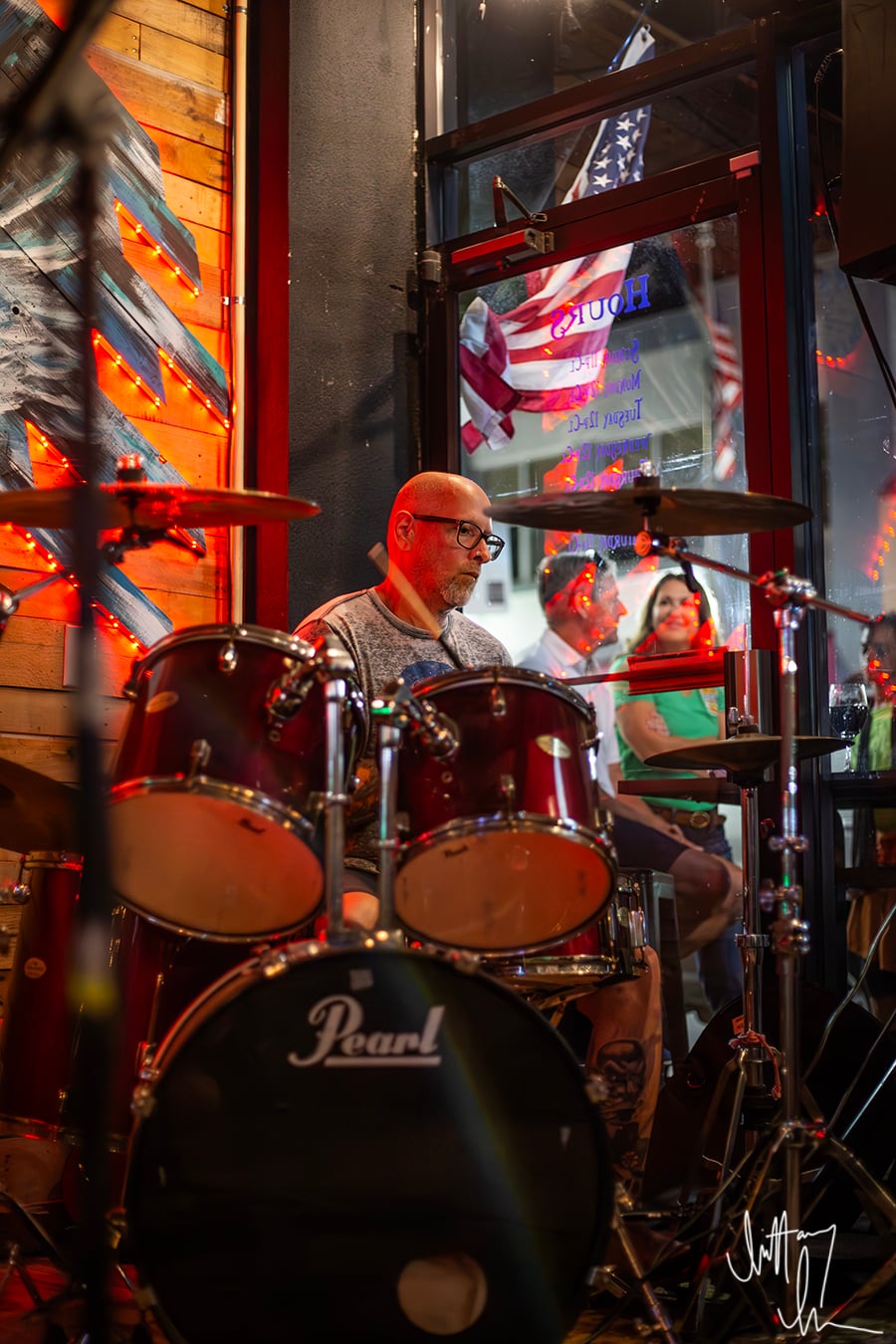
Nice! What are you up to these days, and do you still play drums?
I sold the business I'd owned for more than 20 years in Boise, moved to Florida, and retired. Now I live just a couple blocks from the beach. I spend my time surfing, boogie boarding, body surfing, and paddle boarding.
As I mentioned earlier, I'm currently playing drums in a band called Deaf Locals, and I also started doing CrossFit a few years ago.
***
Watch Anthony's interviews on the A Hardcore Conversation YouTube page.
Tagged: a hardcore conversation, septic death