If you spend enough time digging into underground music from outside the usual Western hubs, you’ll eventually find a band whose story stops you cold. Xain, a project split between Moscow and Vilnius but spiritually rooted in Baku, Azerbaijan, is one of those bands. Their debut EP, Xaraba, dropped last month and immediately stood out for its collision of mathcore chaos and Azerbaijani jazz tradition—something vocalist Toghrul describes not as a gimmick but as a form of cultural inevitability.
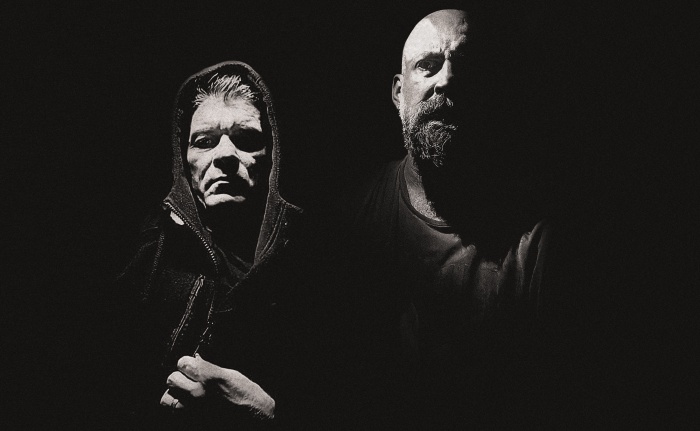
For him and guitarist Elkhan, the origin of Xain stretches back decades. “Elkhan and I have been playing heavy music together since the early 2000s,” Toghrul tells No Echo. “We were part of Fatal Nation, one of the very few metal bands in Baku with real gear, a real rehearsal space, and real drive. The scene was tiny. Venues kept disappearing. Everything survived only because a handful of stubborn musicians refused to quit.”
That stubbornness became a defining trait. Even as the infrastructure around them collapsed—venues shutting down, rehearsal rooms becoming too expensive, musicians giving up one by one—the two kept going. “By the time we started this project, there were almost no venues left in Baku for underground bands,” he says. “The audience that existed was loyal but scattered. It became impossible to build anything when the infrastructure kept collapsing beneath you.”
Eventually, life pulled them in different geographic directions. Elkhan relocated to Moscow; Toghrul ended up in Vilnius. Whatever remained of a homegrown heavy scene in Azerbaijan continued to shrink behind them. But instead of ending their creative partnership, the distance reshaped it. “Today we live in different cities… everything we create happens remotely,” he explains. “There’s no rehearsal room, no scene around us, no blueprint for what we’re building. In a way, that isolation shaped our sound. When you’re scattered across borders, you stop trying to fit in anywhere. You simply create the thing you wish existed.”
What they wished existed was something that didn’t sound like anyone else—a head-on collision between mugham and mathcore.
“If you grew up in the Caucasus, jazz isn’t background music… it’s in the air,” Toghrul says. He references the legendary Vagif Mustafazadeh—whose fusion of mugham and jazz remains one of Azerbaijan’s most powerful cultural contributions—and his daughter Aziza, who carried that approach into the modern world. “The unpredictability, the drama, the microtonal bends… it’s something we heard all our lives but never thought to bring into metal or hardcore.”
At some point, a question formed: What if Vagif Mustafazadeh had grown up on Converge instead of Coltrane? What happens when mugham’s emotional volatility smashes directly into mathcore’s structural chaos?
That question became the blueprint for their debut EP, Xaraba. The title—meaning “ruin”—carries a double weight. “It describes both Baku’s heavy scene and something far more personal,” Toghrul reveals. “It reflects my childhood, the domestic violence I grew up with, the toxic environment people in Azerbaijan call xaraba. In my case, it was a tiny flat in Baku where I spent my early years.”
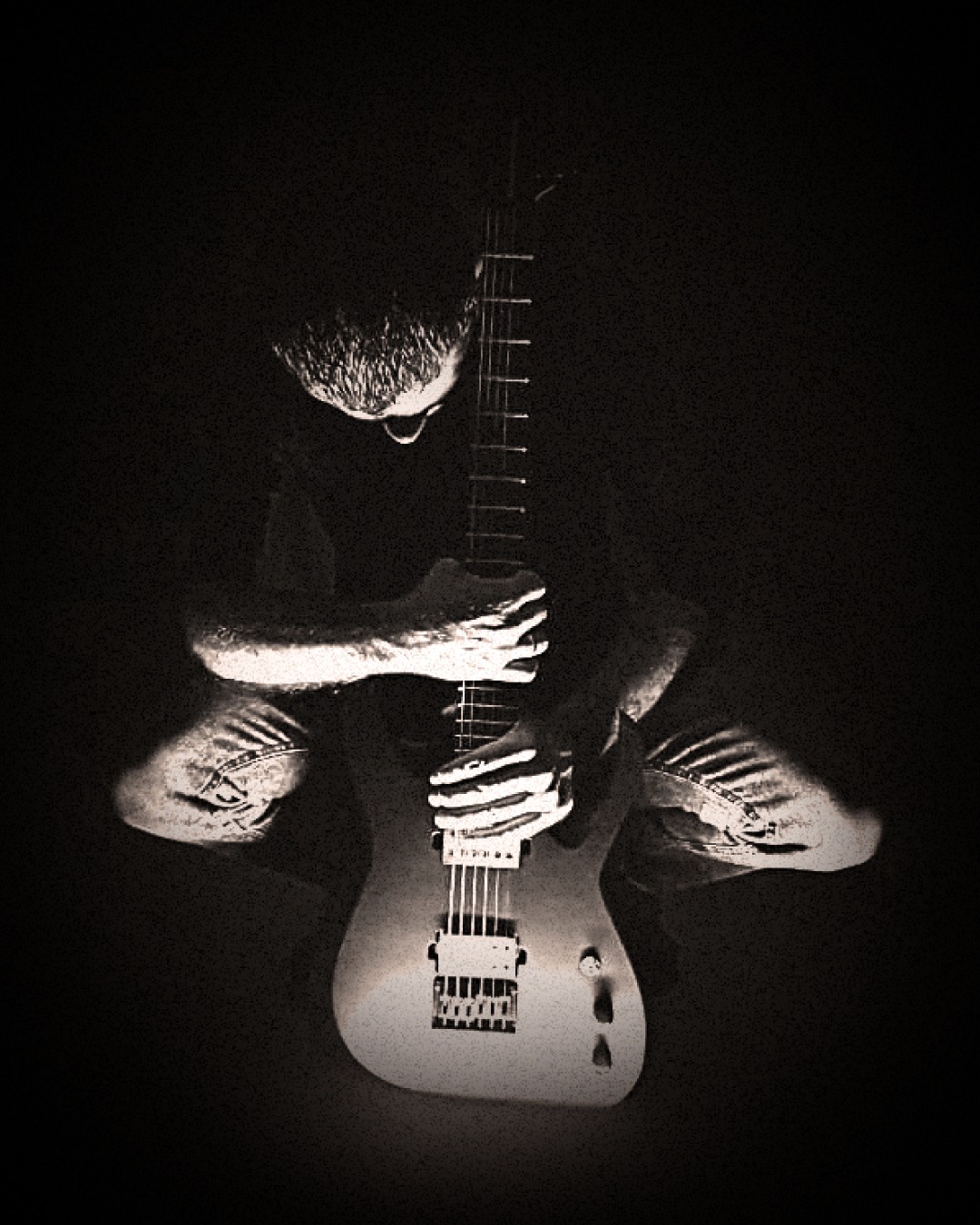
Bringing all of that into musical form required a creative network stretching across multiple countries. Elkhan recorded guitars, bass, and effects in Moscow at Roman Kosterin’s studio. Drums were handled in Novorossiysk by their friend Vladimir Udarnov, who replayed Elkhan’s programmed parts with subtle touches of his own. Vocals were tracked in Vilnius with Lukas Jankauskas. Roman then mixed and mastered the entire record back in Moscow.
The result is something that doesn’t fit comfortably into any existing category—and that’s exactly the point. “We stopped waiting for a scene and built our own language instead,” Toghrul says. “Not Western metal with a borrowed accent. Not another copy of a copy. Something that actually sounds like where we’re from.”
They call it mughamcore—mathcore infused with Azerbaijani musical DNA. It’s abrasive, intricate, disorienting, and unmistakably personal. “Maybe it’ll confuse people,” he laughs. “Maybe it’s too strange for metalheads and too intense for jazz listeners. Most probably it’ll never be mainstream. But it feels honest. And that honesty matters more to us than belonging anywhere.”
He ends with the question that sits at the heart of Xain’s existence: “If we don’t create this sound, who will?”
***
Xain on social media: Instagram
Tagged: xain