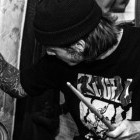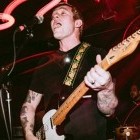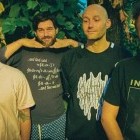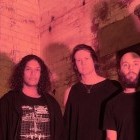
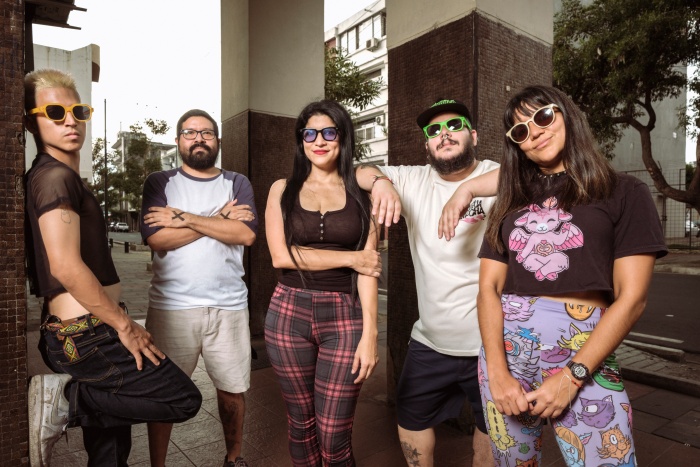
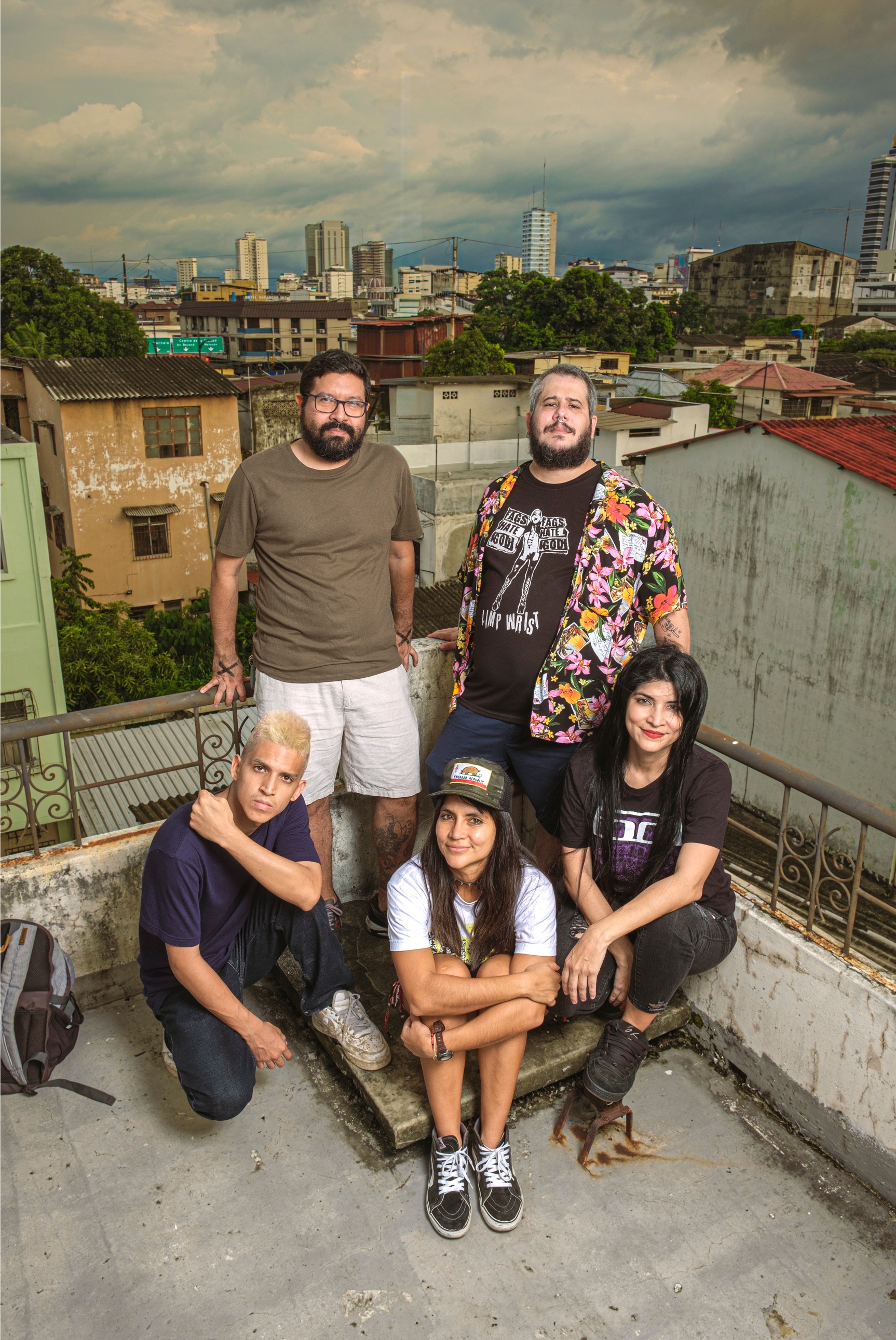
Pukarana have spent more than two decades using hardcore punk as a vehicle for confronting injustice in their native Ecuador. Founded in 2003 by sisters Catalina and Elizabeth Coronel alongside guitarist Freddy Terán, the Guayaquil band emerged from frustration with the political and social realities surrounding them. Although lineup changes and periods of inactivity have marked their history, the project’s purpose has remained consistent: writing direct, socially conscious music that challenges indifference and gives space to stories that might otherwise be ignored.
That commitment is especially clear on Pukarana’s latest single, “Suicidio Escolar,” which addresses the deaths of two Ecuadorian teenagers failed by the institutions that were supposed to protect them. In the following interview, vocalist Elizabeth Coronel discusses discovering underground music through borrowed cassettes, the Latin American bands that shaped her approach, Ecuador’s resilient hardcore community, and why Pukarana will continue making music as long as there are meaningful stories left to tell.
Can you give a quick background on Pukarana—how you formed, how the lineup came together, and what initially pushed you to start the project?
Pukarana was founded in 2003 by my sister, Catalina Coronel, and our guitarist at the time, Freddy Terán. They decided to start the band and came up with the name Pukarana. Once the project began to take shape, they invited me to join as the vocalist. I accepted without ever imagining that, more than two decades later, we would still be carrying this project forward.
From the very beginning, Pukarana was about much more than making music. It was born as an outlet for the frustration, rebellion, and urgency we felt as young people, and as a way to speak out against the social injustices and political decisions that affected—and still affect—our country. Hardcore and punk gave us the perfect language to turn that anger into something meaningful and give a voice to issues many people preferred to ignore.
Like many independent bands, we’ve gone through lineup changes and even a period of inactivity. But the spirit behind Pukarana never disappeared. Catalina has remained the band’s bassist since day one, and today we continue to be driven by the same conviction that inspired us in the beginning: music can challenge the status quo, spark reflection, and connect with people who believe hardcore is not just a sound, but a way of confronting reality.
When and how were you introduced to hardcore? What were some of the first bands that had a big impact on you, whether at home or elsewhere?
I discovered hardcore when I was about 15 or 16 years old, though I can’t remember exactly. A friend lent me a cassette called Llamado a los Descerebrados 2 by the Ecuadorian band NOTOKEN. That was my first real encounter with this kind of music, sometime in the early 2000s. At the time, I didn’t even know it was called hardcore. I just remember listening to that cassette and thinking, “I love what this band is doing.”
Not long after that, I discovered Fertil Miseria from Colombia. They had a huge impact on me and became one of my biggest influences. Later, I got into IxRxA, which leans more toward punk. Those bands shaped not only the way I understood heavy music, but also the idea that music could be a powerful way to express ideas and challenge what was happening around us.
Back then, discovering underground music wasn’t easy. Streaming didn’t exist, internet access wasn’t part of everyday life, and CDs were far too expensive for me. Most of the music I discovered came from friends who lent me cassettes or from attending underground shows. In my city, it was almost impossible to hear this kind of music on the radio. Looking back, every new band felt like a real discovery, and I think that experience made me appreciate the hardcore scene even more.
Tell us about “Suicidio Escolar” and the inspiration behind the lyrics.
“Suicidio Escolar” (“School Suicide”) is our latest single, inspired by real events that happened in Ecuador. The song tells two true stories of teenagers who took their own lives after enduring abuse, bullying, and the complete failure of the educational system to protect them.
One story is based on Paola Guzmán Albarracín, who died by suicide in 2002 after years of sexual abuse and harassment by the vice principal of her school, who exploited his position of authority. Despite everything she went through, those responsible initially went unpunished. Her mother spent 18 years fighting for justice, and the case ultimately led to a landmark ruling by the Inter-American Court of Human Rights, which held the Ecuadorian state accountable for failing to protect her rights.
The other story is inspired by Rick Mora, a 16-year-old from Guayaquil who died by suicide after enduring relentless bullying and discrimination because he was gay. Despite repeated complaints from his family, the school failed to take meaningful action to protect him, allowing the abuse to continue until it was too late.
Although these cases happened more than 20 years apart, they reveal the same painful reality: schools continue to fail young people when they need protection the most. We wrote this song because we believe hardcore has always been about confronting uncomfortable truths and giving a voice to those who have been ignored. If our music can help keep these conversations alive—even for one more person—then it has already served its purpose.
How would you describe your sound right now? Are there any bands, scenes, records, or influences that have really shaped what you’re doing?
As a vocalist, I’d say Fertil Miseria has had the biggest influence on me. I think that influence can still be heard in the way I sing today. I’ve always admired Vicky Castro—not only for her voice, but for the intensity, honesty, and conviction she brings to every performance.
As a band, we describe our sound as hardcore punk. We’re influenced by classic bands like Sick of It All, Suicidal Tendencies, Minor Threat, and Agnostic Front, but Latin American hardcore has been just as important in shaping our identity. Bands like NOTOKEN from Ecuador, Fertil Miseria from Colombia, COJOBA from Puerto Rico, and IxRxA have played a huge role in defining who we are musically, and we believe those influences can still be heard in our sound today.
Those bands helped lay the foundation for what we do, but we’ve never wanted to imitate anyone. Our goal has always been to develop our own voice and write honest songs that reflect our experiences, the reality we live in, and the social issues that matter to us.
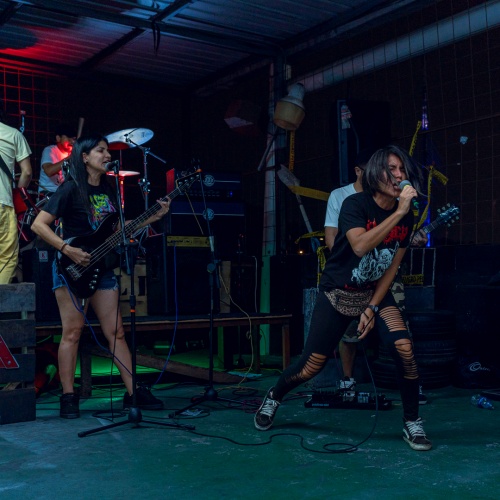
How is the hardcore scene in Ecuador now? Are there any newer or underrated bands from your area that people should be paying attention to?
The hardcore scene in Ecuador is smaller than in many other countries, but it’s incredibly passionate and resilient. In Guayaquil, where we’re based, there are veteran bands like NOTOKEN, who recently celebrated 35 years, as well as Moral Abajo.
Some newer bands worth checking out include MAD, QSQD, and SRJAID. It’s not a massive community, but it’s built on dedication, friendship, and the DIY spirit that has always defined hardcore.
What’s next for the band in the coming months? New music, touring, recording, or anything else in the works?
We’re currently recording a new song that we hope to release within the next couple of months. It deals with mental health and the pressure of trying to live up to society’s expectations. We’d also love to produce a music video for it.
Later this year, we’re planning to release a limited-edition physical CD to celebrate Pukarana’s 23rd anniversary. We want it to be a collector’s edition of around 30 hand-numbered copies accompanied by a fanzine.
In October, we’ll be performing at Vulgar Fest in Quito, where we’ll share the stage with bands from Spain, Argentina, and Colombia. We’re really looking forward to it.
Is there anything else you would like to share with the No Echo readers?
Making hardcore punk—or any underground music—is never easy, especially in a country where independent bands often have to build everything on their own. But we’ve learned that passion is stronger than obstacles. As long as we don’t lose sight of why we started, every rehearsal, every show, every song, and every person who connects with our music makes the journey worthwhile.
Hardcore has never been about fame or commercial success. It’s about honesty, community, and having something meaningful to say. As long as there are stories that deserve to be told, Pukarana will keep making music.
***
Pukarana on social media: Instagram

Tagged: pukarana