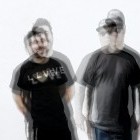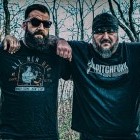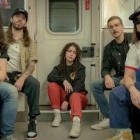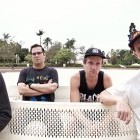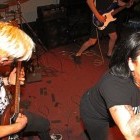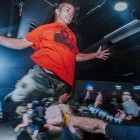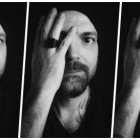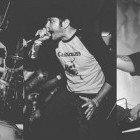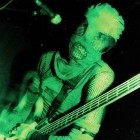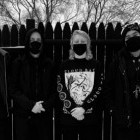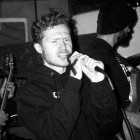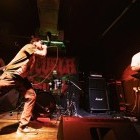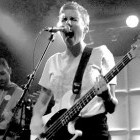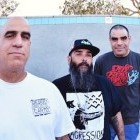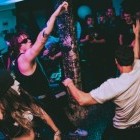
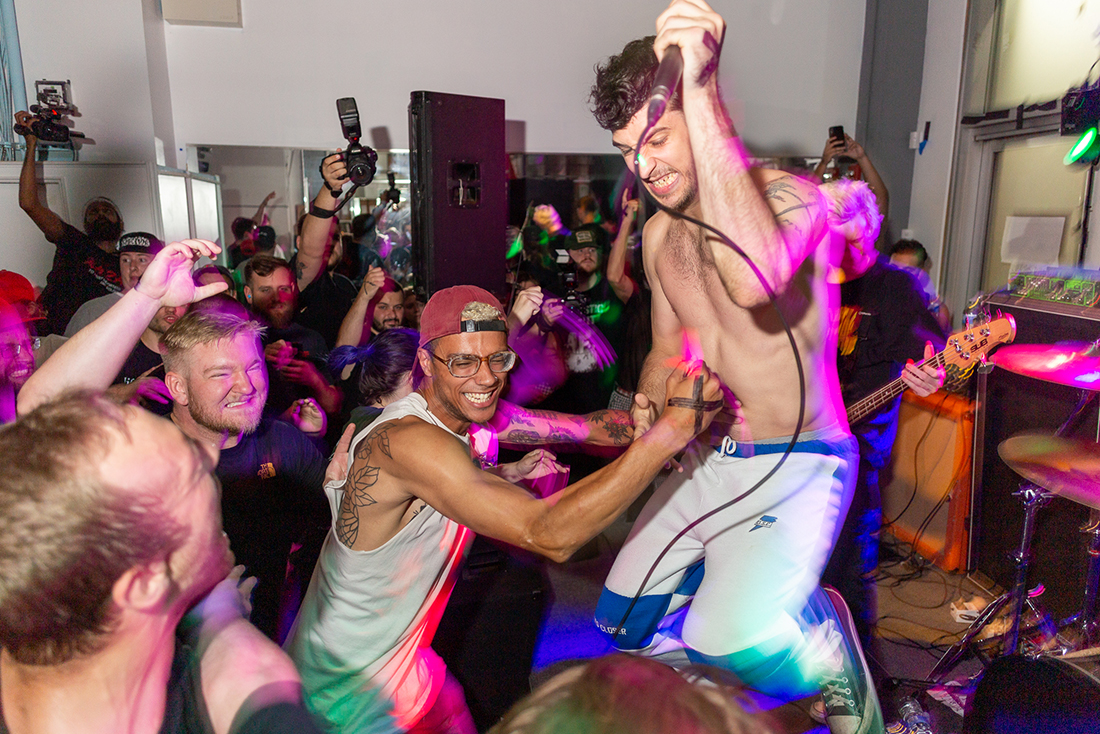
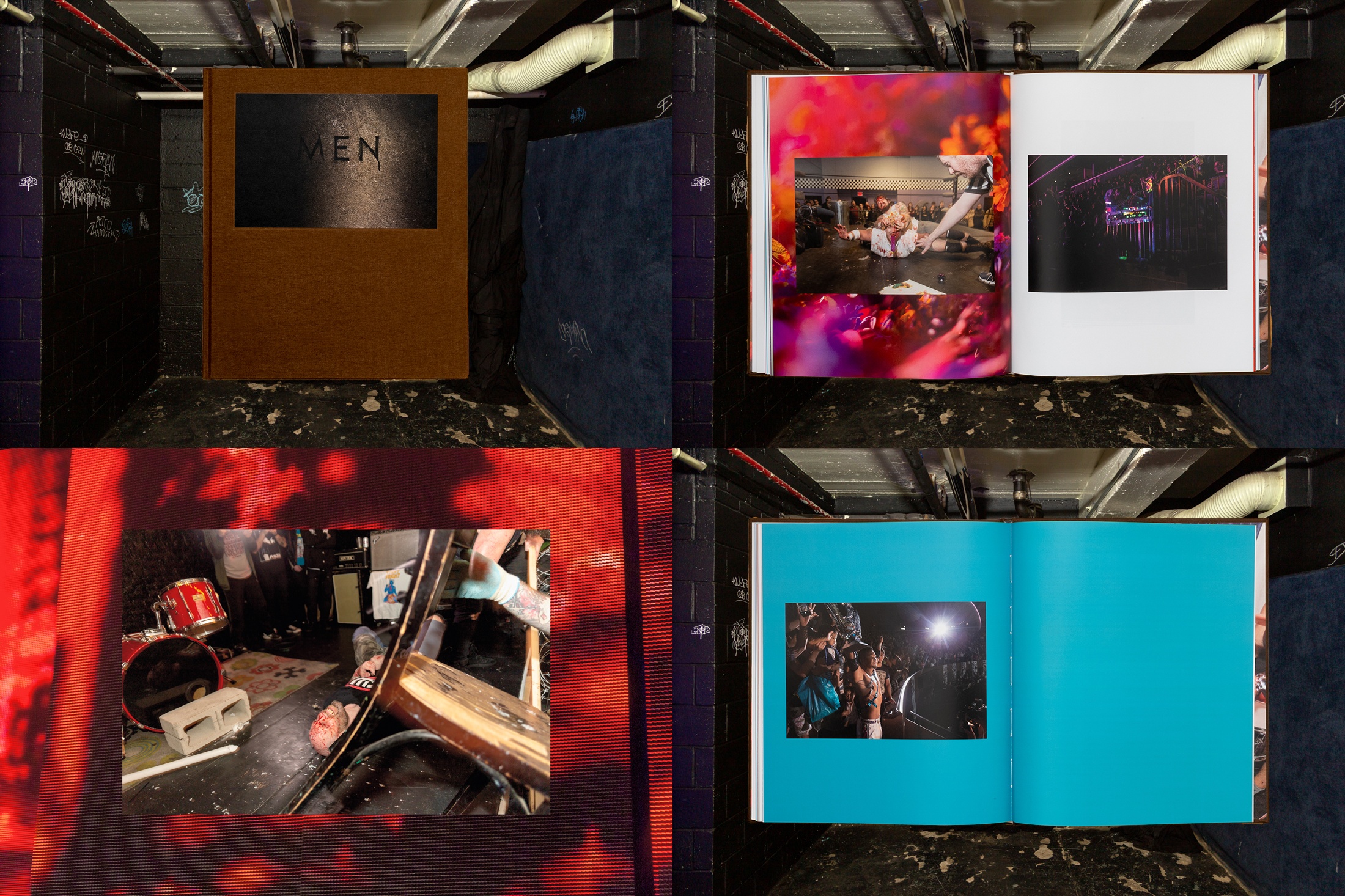
Photographer Carl Gunhouse has been capturing hardcore shows since the early ’90s, but his new book Men, which gathers images from 2013 to 2019, is more than just a record of events. By focusing on the masculine worlds of indie wrestling and hardcore, the book shows the sweat, spectacle, and stylized aggression of these scenes, while also exploring what it means to grow up within them.
When Gunhouse returned to these venues in his mid-30s, single and thoughtful, the project took on a more personal meaning. What started as a way to create striking images turned into something more meaningful. “The more the work was about me, as opposed to what literally was in the picture, the more the work was art,” he says.
In the following interview, Gunhouse discusses masculinity, vulnerability, aging in a youth-focused scene, and the reasons he keeps coming back.
Men documents indie wrestling and hardcore shows from 2013 to 2019, but it’s also clearly very personal. At what point did you realize this project wasn’t just about documenting subculture, but about examining your own relationship to masculinity?
I started taking pictures by photographing hardcore shows in the early to mid-90’s, just to be part of things and contribute. In college, Joe Lawton, my Intro to Photography professor and now friend, encouraged me to keep shooting shows. He would challenge me to make my photographs more than just documentation, to hopefully turn them into art. I took that at the time to mean, “Photograph more than just the bands,” and all these years later, that certainly worked its way into how I edited the work for the book.
The other thing he used to razz me about was the number of sweaty shirtless guys on top of each other. So, the seeds of the book go back 30-plus years. I went to grad school and since then have done a lot of work that wasn’t hardcore related and could be squarely described as art photography. But I always kept shooting shows on the side because it was fun. Around 2013, I had wrapped up a body of work from driving around America for over ten years in between teaching.
While searching for another project. I started photographing shows and indie wrestling again, and after a while, I thought maybe I had an art project. I was hoping to make something that wasn’t purely documentary. It took some shooting, but it started to occur to me that the more the work was about me, rather than what was literally in the picture, the more it was art.
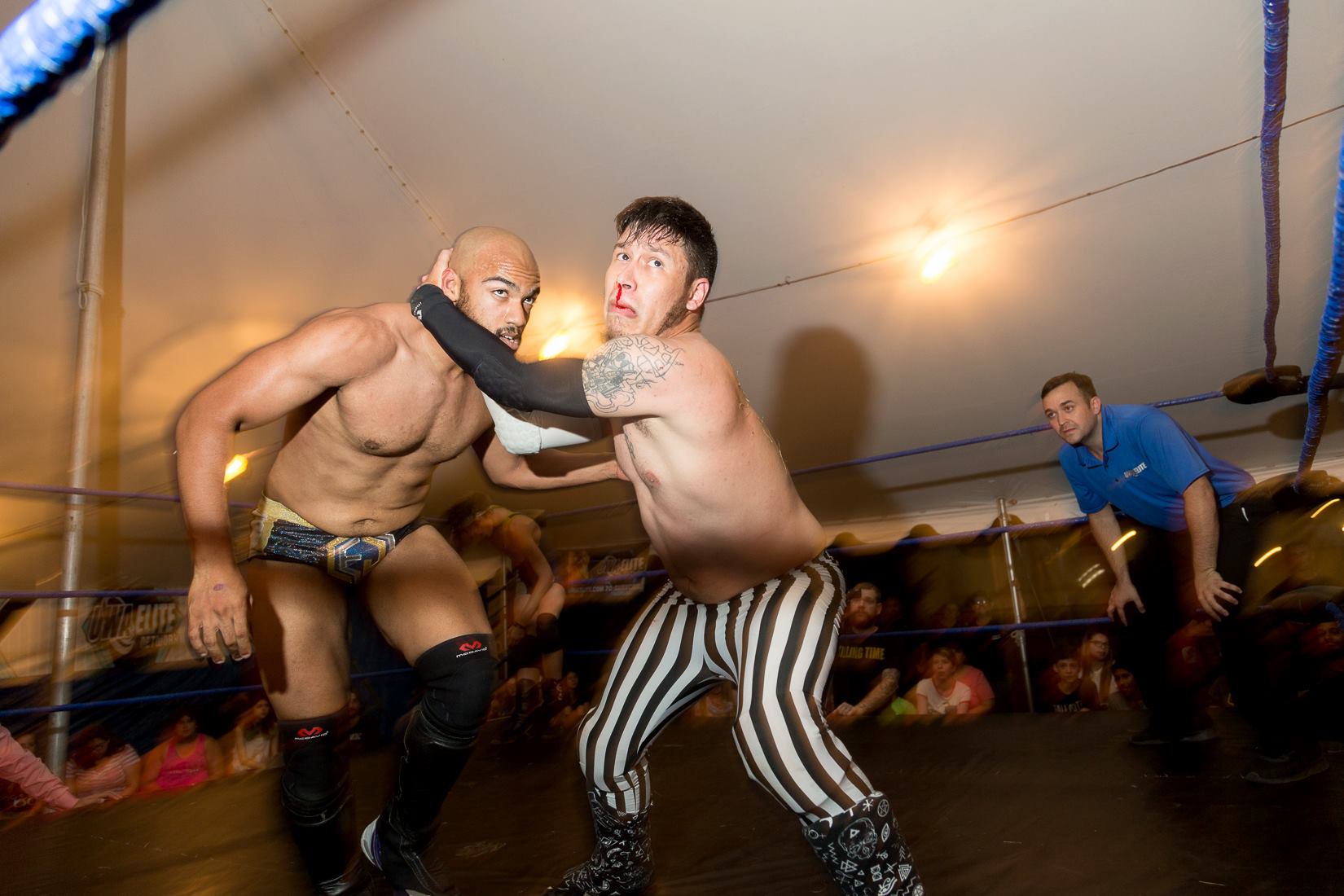
In your artist statement, you describe noticing that many of the men in these rooms were “male, socially awkward, and alone.” How did that realization change the way you approached photographing these spaces?
When I started, I was just making the work, I was just trying to make pictures that seemed cool and not think too much about it. But halfway through, I was being asked to exhibit the work, so I had to start writing an artist’s statement and figure out what the work was about. At the time, “male, socially awkward, and alone” was as much a descriptor of me as of the people in the picture. So, once I started thinking about it more, I internally gravitated to people like that or like myself. I did my best to extend as much grace to the people in the pictures as I would to myself.
Hardcore and indie wrestling both revolve around stylized aggression and exaggerated masculinity. Did you find yourself drawn more to the spectacle, the vulnerability beneath it, or the tension between the two?
Well, now, I feel you are writing a better artist statement than I did [laughs]. Yes, to all of it. On the surface, sure, the spectacle, it is hard not to be in those spaces and not be drawn to the crazy thing that is happening in the room. But the more time I spent thinking about why I have given so much of my life and, more importantly, my adult life to these things, the more I found, as you said, the “tension” compelling. Certainly, my own vulnerabilities have probably made the “stylized aggression and exaggerated masculinity” a lot more appealing to me in a way that I assume it doesn’t for more well-adjusted people don’t
As someone who grew up with hardcore and returned to it more deeply in your mid-30s, did photographing these scenes change how you view aging within a youth-driven subculture?
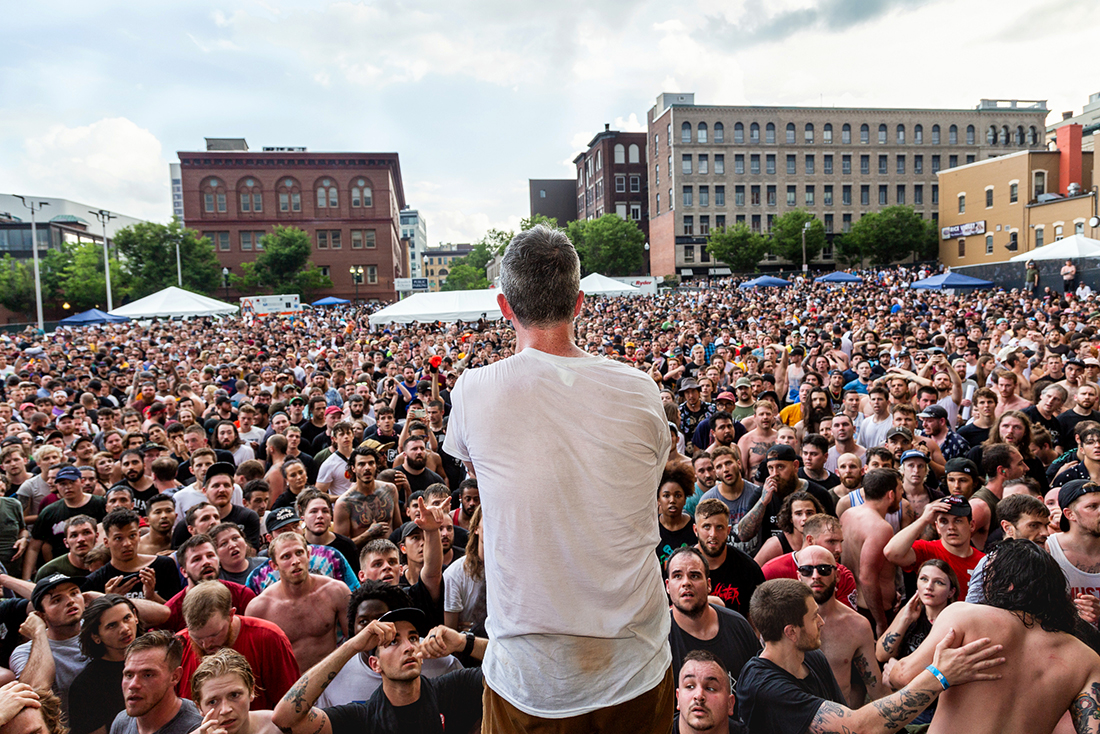
Good question, I never stopped going to shows, but I had certainly fallen into going to “old man shows” of bands from the '90s that were still playing or going to see bands with ex-members of bands from the 90’s. So, when I started shooting more, it wasn’t a complete culture shock. But I did feel a little distance in a good way, as if I were visiting a foreign country where every new detail is different and compelling. But before I knew it, I was back in it and going to way too many shows: it just felt normal.
The more I felt a part of things, the more I tended to forget I wasn’t twice as old as anyone in the room. I became young again. Until I met young adults whose parents I knew from the '90s, and I immediately felt my age. Feeling young is good and, on some level, keeps me young, but hopefully being aware of my age keeps me from being a tragic old guy.
Reflecting on the finished book, do you think the project helped you understand your own questions about masculinity and growing up, or did it make them more confusing?
Oh, I think it helped. Art is just more fun therapy. I am not sure how it manifests, but it strikes me that, as an awkward, stocky person, there is a lot in life that makes you feel small and, in turn, angry, without many healthy places to put that anger. It is good to realize that the “stylized aggression and exaggerated masculinity” has been a good place for that anger, and over the years, made me feel not so small.
***
Men is available now via this link.

Tagged: book